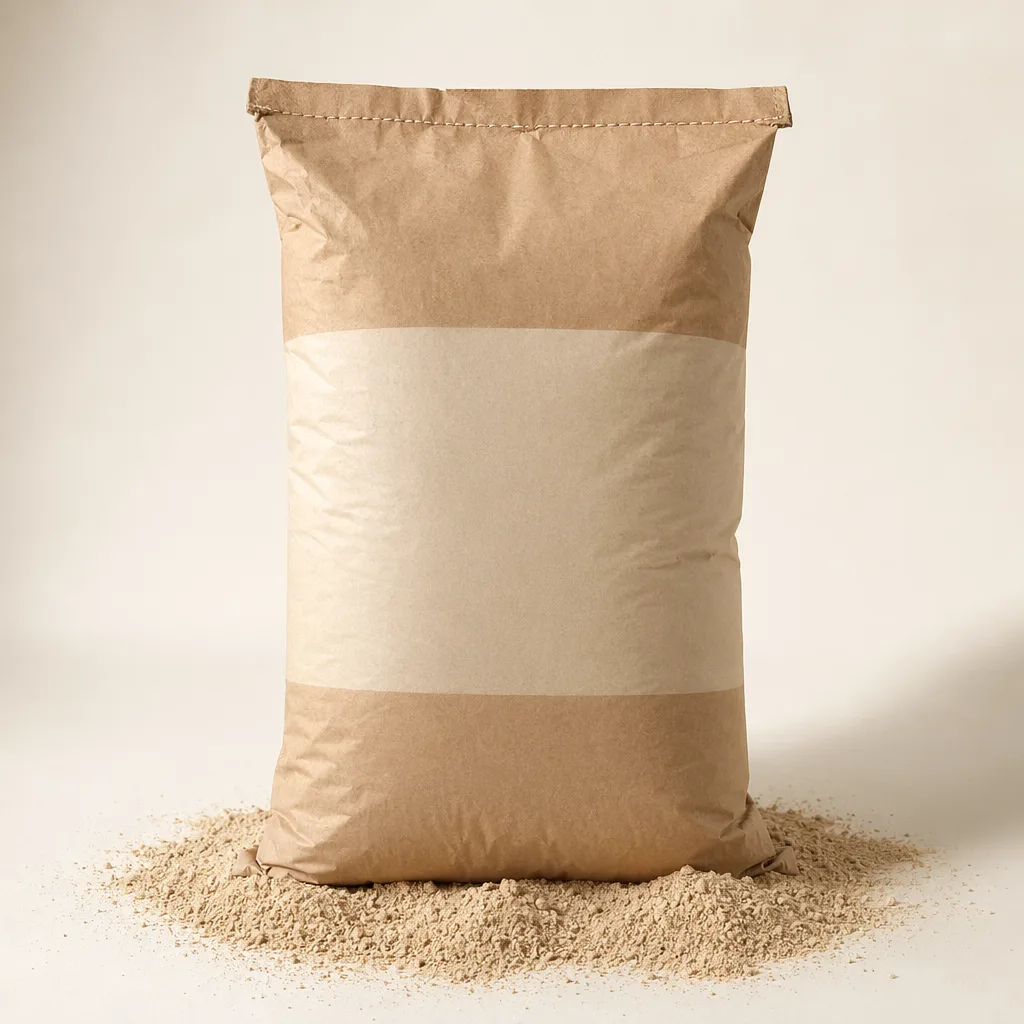
Frozen Dough Bread Improver for Pizza Flatbread
Frozen dough bread improver is a powdered functional blend used to strengthen dough, protect yeast performance, and maintain pizza or flatbread quality after freezing. ArtemisYeast supplies ART-BK-043 in 25 kg multi-wall sacks for industrial bakeries, commissary kitchens, quick-service chains, and frozen dough manufacturers. The product is offered inquiry-only, with wholesale pricing on request. It is designed for controlled thaw-proof-bake workflows where dough extensibility, gas retention, crust color, and post-freeze handling consistency are critical procurement criteria.
- ✓ Free worldwide shipping
- ✓ ISO-aligned manufacturing
- ✓ Certificate of Analysis on request
- ✓ Bulk & custom volumes quoted on request
Overview
ART-BK-043 is a frozen dough bread improver formulated for pizza bases, flatbreads, par-baked discs, sheeted dough, and other yeast-leavened products that are frozen before final proofing or baking. It supports the gluten network during mixing, mechanical sheeting, freezing, frozen storage, and thawing. Typical functionality is provided through a carrier system with oxidizing support, emulsifier technology, and baking enzyme activity selected for dough strength, tolerance, crumb openness, and crust uniformity.
Typical specification targets include off-white to cream free-flowing powder, moisture ≤10.0%, ≥95% through 40 mesh, and recommended dosage of 0.5-1.5% on flour weight, adjusted by flour protein, fat level, yeast dosage, freeze time, and line speed. The product is not a yeast replacement; it is used alongside instant dry yeast, compressed yeast, or liquid yeast depending on bakery process design. For related inputs, see the baking yeast category or request a formulation-matched bulk quote on request.
Applications
- Frozen pizza bases: improves dough tolerance during dividing, rounding, sheeting, docking, blast freezing, and distribution at approximately -18°C.
- Pizza flatbread and oval flatbread: supports extensibility with reduced tearing on high-speed sheeters and helps maintain edge lift after frozen storage.
- Par-baked crust operations: assists crumb resilience and crust color consistency when dough is partially baked, cooled, frozen, and finished at store level.
- Central bakery and chain commissary production: helps standardize dough handling across flour lots, mixers, proof times, and franchise baking conditions.
- Industrial artisan-style lines: suitable for long-fermentation formulas where controlled strength and freeze-thaw stability are required without excessive dough tightening.
R&D teams should validate dosage through pilot trials using the target flour ash, protein, water absorption, yeast type, fermentation schedule, blast-freeze curve, and intended frozen shelf life. Plant managers commonly evaluate dough temperature after mixing, proof height, freezer dwell time, thaw loss, bake volume, crust blistering, and finished bite. Procurement teams can specify ART-BK-043 for 25 kg sack supply where consistent lot documentation, export-ready packing, and repeatable functional performance are required.
Storage and Handling
Store unopened sacks in a cool, dry, odor-free warehouse, ideally below 25°C and below 65% relative humidity. Keep product away from direct sunlight, condensation, cleaning chemicals, strong odors, and open water sources. After opening, reseal the liner or transfer to a clean, dry, food-contact container to prevent moisture pickup and caking. Under recommended storage, typical shelf life is 12 months from manufacture, subject to the certificate of analysis for the supplied lot.
For frozen dough systems, add the improver with flour or other dry ingredients to ensure uniform distribution before hydration. Avoid direct contact with concentrated salt, high-sugar syrups, or very cold water before the mix is dispersed. Maintain validated mix energy and final dough temperature because overmixing, underdeveloped gluten, or slow freezing can reduce the benefit of the improver. Use standard bakery dust control and allergen segregation procedures; wheat-based carrier or other declared ingredients may apply depending on final specification.
Quality and Documentation
ArtemisYeast supplies ART-BK-043 for B2B procurement with lot traceability, specification review, and export documentation support. A certificate of analysis can be provided for contracted lots, covering agreed parameters such as appearance, moisture, mesh, functional dosage guidance, production date, shelf life, and microbiological limits where applicable. Typical food-grade microbiology targets may include total plate count ≤10,000 CFU/g, yeast and mold ≤100 CFU/g, and absence of Salmonella in 25 g, subject to final origin and specification.
Manufacturing and supplier controls are managed under food-safety and HACCP-aligned systems. Documentation available on request may include allergen statement, non-GMO statement where applicable, food-grade declaration, SDS, country of origin, and Halal, Kosher, ISO 22000, or FSSC 22000 documentation when available for the producing site and lot. Review current documentation through quality support before placing repeat orders, especially for chain bakery tenders or private-label frozen dough programs.
Storage & Handling
Refer to the CoA for product-specific storage conditions. Ship cold-chain where required.
Quality & Documentation
Manufactured under ISO-aligned quality management systems. Full documentation — Certificate of Analysis (CoA), Material Safety Data Sheet (MSDS), formulation summary, and stability data — is available on request. Email info@artemisyeast.com with the SKU.
About this product
01 What is the typical shelf life?
02 Do you offer documentation (CoA, food-grade declaration)?
03 What is the minimum order quantity?
04 Is bulk pricing available?
05 How is this product shipped internationally?
More from Baking Yeast
Bread Emulsifier for Industrial Baking and Frozen Dough
Wholesale bread emulsifier for industrial, artisan, and chain bakery operations. Inquiry-priced bulk.

Instant Dry Yeast for Chilled Dough, 25 kg Sack
Wholesale instant dry yeast for chilled dough for industrial, artisan, and chain bakery operations. Inquiry-pr…
Concentrated Bread Improver for Bulk Bakery Use
Wholesale concentrated bread improver for industrial, artisan, and chain bakery operations. Inquiry-priced bul…
Crumbs Bread Improver for Bulk Bakery Production
Wholesale crumbs bread improver for industrial, artisan, and chain bakery operations. Inquiry-priced bulk.