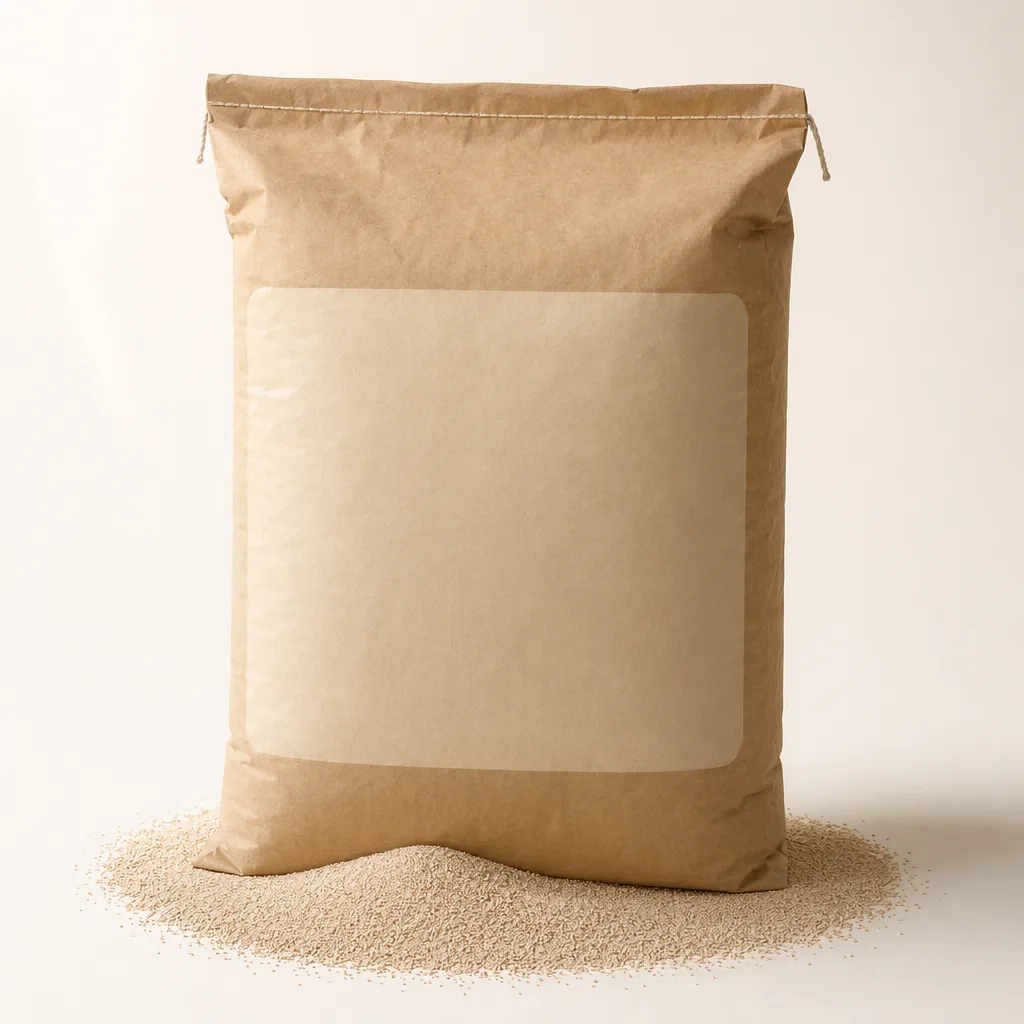
Instant Dry Yeast for Self-Rising Flour
Instant dry yeast for self-rising flour is a low-moisture Saccharomyces cerevisiae leavening ingredient designed for dry flour premixes used in pizza and flatbread production. ART-BK-055 is supplied for industrial bakeries, commissaries, milling premix plants, and chain bakery operations that need consistent fermentation after hydration. It is packed in a 25 kg multi-wall sack for bulk handling, with wholesale pricing on request through ArtemisYeast.
- ✓ Free worldwide shipping
- ✓ ISO-aligned manufacturing
- ✓ Certificate of Analysis on request
- ✓ Bulk & custom volumes quoted on request
Overview
ART-BK-055 is an instant dry baker’s yeast selected for incorporation into self-rising flour systems, pizza bases, flatbreads, naan-style products, par-baked shells, and frozen or ambient dry mixes where the yeast remains dormant until water is added. The product is intended for direct addition to flour without a separate proofing step, supporting simplified batching in spiral mixers, continuous dough systems, and commissary-scale preparation. Procurement teams can compare this item with other formats in the baking yeast category when specifying yeast for premix or dough operations.
Typical specification targets include live Saccharomyces cerevisiae activity of not less than 5×10^10 CFU/g at manufacture, moisture not more than 5.5%, light tan to beige granules, clean fermented aroma, and good dispersion in flour. Particle size is normally controlled for dry blending, with most material passing standard bakery premix screens while avoiding excessive dust. For self-rising flour, compatibility with salt, sugar, flour treatment agents, and chemical leavening components should be validated in the customer’s formula because water activity, packaging barrier, and storage temperature strongly influence yeast stability.
Applications
- Pizza and flatbread premixes: Designed for dry blends used in thin crust, pan pizza, focaccia-style flatbread, pita, lavash, and retail or foodservice flour mixes that require fermentation after hydration.
- Industrial bakery plants: Suitable for automated weighing and flour blending where a consistent yeast count, low moisture, and batch-to-batch performance help control dough development, proof time, and bake volume.
- Artisan and chain bakery operations: Supports centralized dry-mix procurement for multi-site production, allowing standard recipes across commissaries and in-store bake-off programs.
- R&D formulation: Useful for trials involving flour protein level, absorption, salt level, sugar level, oil addition, and proofing profile. Recommended use rate is formula-dependent; common pizza and flatbread systems are often evaluated in the 0.2% to 1.0% range on flour weight before final optimization.
- Dry premix manufacturing: Can be blended with wheat flour, whole grain flour, starches, dough conditioners, and controlled levels of leavening salts when the finished mix is packed in a moisture-protective bag. For product matching, send target dough process, flour specification, and expected shelf life through the bulk quote request form.
Storage and Handling
Store unopened 25 kg sacks in a clean, dry, odor-free warehouse at 5–25 °C, away from steam lines, direct sunlight, and high-humidity areas. Keep pallets off the floor and protect from condensation during container unloading or seasonal temperature changes. Under recommended storage, typical shelf life is up to 24 months from manufacture for unopened packaging; actual performance should be confirmed against the certificate of analysis and the customer’s incoming quality plan.
After opening, reseal the sack promptly or transfer to a dry, food-grade container with lot identification retained. Avoid prolonged exposure to air, water mist, or warm bakery environments because yeast activity can decline when moisture uptake occurs. For dry flour blending, add yeast after major flour scaling and before final micro-ingredient mixing when practical, using gentle mixing to obtain uniform distribution without granule damage. Do not expose the dry yeast directly to concentrated salt brine, hot water, or sanitizing chemicals. Hydration water for dough should normally be controlled within the bakery’s standard temperature range to achieve target final dough temperature and proof schedule.
Quality and Documentation
ArtemisYeast supplies ART-BK-055 for B2B procurement with lot traceability, export documentation support, and product specification review before order confirmation. A certificate of analysis can be provided for each lot, typically covering appearance, odor, moisture, viable count or activity indicator, and microbiological limits relevant to food ingredients. Additional documentation may include allergen statement, non-GMO statement where applicable, food-grade declaration, country-of-origin information, and safety data sheet.
Manufacturing and supplier controls are managed through food-safety programs aligned with HACCP principles, and documentation for systems such as ISO 22000, FSSC 22000, Halal, or Kosher may be available on request depending on production site and lot. Customers should verify any required certification status before purchase, especially for private-label flour mixes, export bakery products, or retailer-approved supply chains. ArtemisYeast can support specification alignment, sample evaluation, and logistics planning through the quality documentation process. Bulk quote on request; public pricing is not posted.
Storage & Handling
Refer to the CoA for product-specific storage conditions. Ship cold-chain where required.
Quality & Documentation
Manufactured under ISO-aligned quality management systems. Full documentation — Certificate of Analysis (CoA), Material Safety Data Sheet (MSDS), formulation summary, and stability data — is available on request. Email info@artemisyeast.com with the SKU.
About this product
01 What is the typical shelf life?
02 Do you offer documentation (CoA, food-grade declaration)?
03 What is the minimum order quantity?
04 Is bulk pricing available?
05 How is this product shipped internationally?
More from Baking Yeast
Bread Emulsifier for Industrial Baking and Frozen Dough
Wholesale bread emulsifier for industrial, artisan, and chain bakery operations. Inquiry-priced bulk.

Instant Dry Yeast for Chilled Dough, 25 kg Sack
Wholesale instant dry yeast for chilled dough for industrial, artisan, and chain bakery operations. Inquiry-pr…
Concentrated Bread Improver for Bulk Bakery Use
Wholesale concentrated bread improver for industrial, artisan, and chain bakery operations. Inquiry-priced bul…
Crumbs Bread Improver for Bulk Bakery Production
Wholesale crumbs bread improver for industrial, artisan, and chain bakery operations. Inquiry-priced bulk.