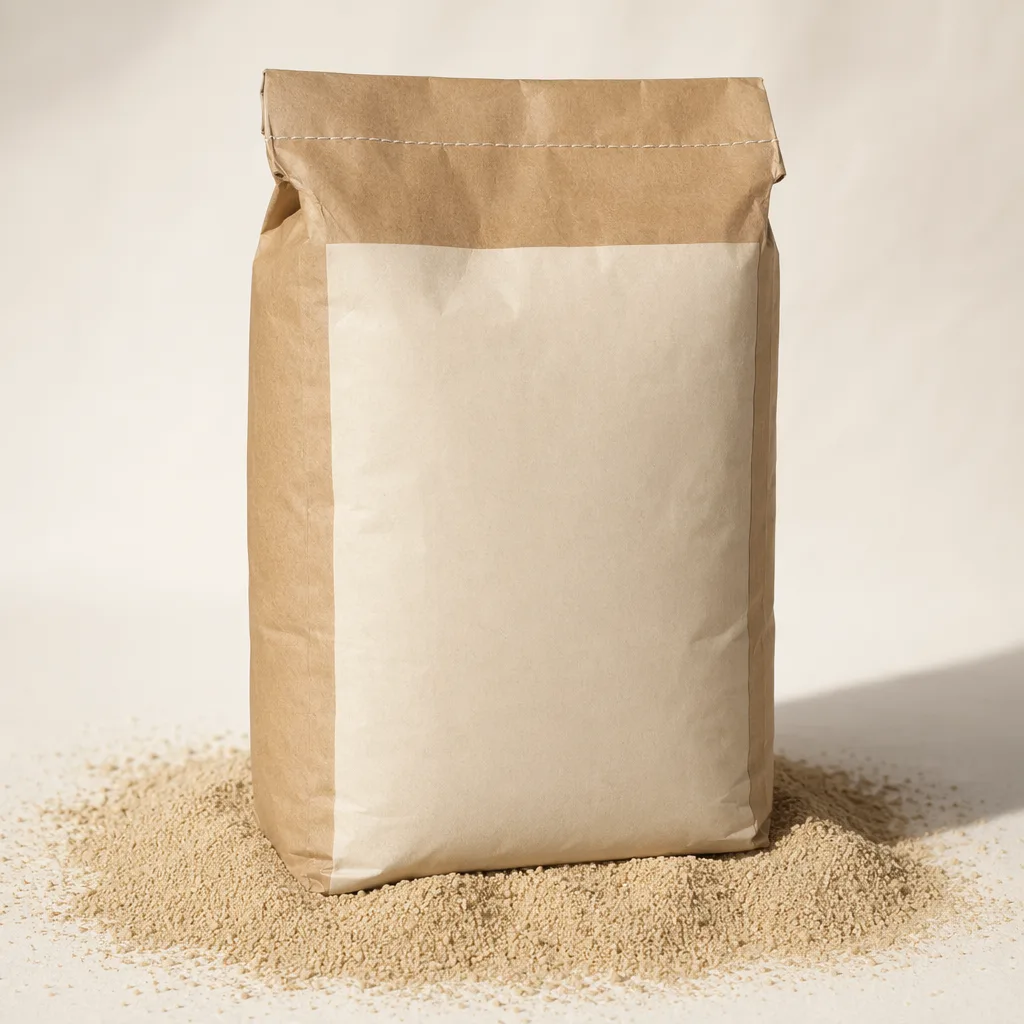
Selenium-Enriched Yeast for Vegan Foods
Selenium-enriched yeast is an inactive nutritional yeast ingredient containing organic-bound selenium, primarily as selenomethionine, for plant-based food and premix applications. ART-NY-075 is supplied as a free-flowing powder in a 10 kg foil-lined sack for industrial blending, dry mix, and tablet or capsule manufacturing. ArtemisYeast supports wholesale availability for qualified buyers, with bulk quote on request and specification review before order confirmation.
- ✓ Free worldwide shipping
- ✓ ISO-aligned manufacturing
- ✓ Certificate of Analysis on request
- ✓ Bulk & custom volumes quoted on request
Overview
ART-NY-075 selenium-enriched yeast is produced by cultivating food-grade yeast in a controlled selenium-containing fermentation medium, then inactivating, drying, and milling the biomass. The result is a nutritional yeast matrix in which selenium is incorporated into yeast proteins and amino acid structures rather than added as a simple inorganic salt. Typical supply specifications may include total selenium at 2,000 mg/kg, selenomethionine as a major selenium fraction, moisture not more than 6.0%, crude protein 40-50%, ash not more than 10%, and a fine powder profile with 95% passing 80 mesh, subject to batch confirmation on the certificate of analysis.
This ingredient is designed for vegan, vegetarian, and plant-based formulations that require a label-friendly selenium source with consistent dispersion in dry systems. It is inactive and not intended for leavening or fermentation performance. The mild yeast character is compatible with savory bases, nutrition powders, fortified food blends, and premix systems. For related inactive yeast formats, see the nutritional yeast category.
Applications
- Vegan and plant-based foods: used in dry seasoning blends, meat alternative systems, dairy-free powders, savory toppings, and fortified meal components where an organic-bound selenium ingredient is preferred.
- Nutrition premixes: suitable for controlled addition into powder premixes, granulated blends, and dry-fill systems. The yeast carrier contributes protein and typical yeast solids while delivering selenium in a matrix form.
- Supplement manufacturing: compatible with tablet, capsule, sachet, and stick-pack production when particle size, bulk density, and dosage uniformity are validated by the buyer. Final dosage calculations should be based on the batch CoA selenium assay.
- Food manufacturing R&D: can be evaluated for dispersion, sensory fit, thermal process tolerance, and interaction with minerals, flavors, proteins, starches, and hydrocolloids in finished formulations.
- Procurement programs: offered in 10 kg foil-lined sacks for ingredient buyers requiring lot traceability, export documentation, and wholesale pricing on request.
Storage and Handling
Store unopened sacks in a clean, dry, odor-free warehouse at 5-25°C, away from direct sunlight, moisture, strong oxidizers, and volatile aromatics. Keep the inner liner tightly closed after opening and use resealing, desiccant control, or nitrogen-flushed secondary storage where high humidity is present. Typical shelf life is 24 months from manufacture when stored in original packaging under recommended conditions, subject to the assigned batch date and local storage validation.
Because selenium is a potent trace element, plant operators should handle ART-NY-075 as a measured micro-ingredient. Use calibrated weighing, controlled addition points, dust extraction, and documented batch records. Buyers are responsible for confirming finished-product selenium levels against local food, feed, or supplement regulations.
Quality and Documentation
ArtemisYeast supplies ART-NY-075 with lot-level traceability and procurement documentation for industrial review. A typical documentation package may include certificate of analysis, specification sheet, allergen statement, non-animal origin statement, GMO-status statement where applicable, food-grade declaration, heavy metals results, microbiological limits, and safety data information. Manufacturing documentation aligned with HACCP, ISO 22000, FSSC 22000, Halal, or Kosher requirements may be available on request depending on production site and lot.
Quality control commonly covers appearance, odor, moisture, total selenium assay, microbial limits, and contaminant screening. Suggested microbial targets include total plate count within food-grade limits, yeast and mold control, and absence of Salmonella in 25 g, with final values stated on the CoA. Procurement teams can review the quality and documentation process before placing a purchase inquiry. For current lead time, packaging confirmation, and export paperwork, submit details through the request quote form.
Storage & Handling
Refer to the CoA for product-specific storage conditions. Ship cold-chain where required.
Quality & Documentation
Manufactured under ISO-aligned quality management systems. Full documentation — Certificate of Analysis (CoA), Material Safety Data Sheet (MSDS), formulation summary, and stability data — is available on request. Email info@artemisyeast.com with the SKU.
About this product
01 What is the typical shelf life?
02 Do you offer documentation (CoA, food-grade declaration)?
03 What is the minimum order quantity?
04 Is bulk pricing available?
05 How is this product shipped internationally?
More from Nutritional Yeast
Natural Yeast Protein for Plant-Based Formulations
Inactive a sustainably sourced natural yeast protein for vegan, plant-based, and supplement manufacturers.
Inactive Yeast Peptide for Plant-Based Nutrition
Inactive a multifunctional peptide for vegan, plant-based, and supplement manufacturers.
Inactive Saccharomyces Cerevisiae Nutritional Yeast
Inactive saccharomyces cerevisiae, yeast probiotics for human gut health for vegan, plant-based, and supplemen…
Inactive Yeast Protein White Powder for Bulk Supply
Inactive yeast protein white paper for vegan, plant-based, and supplement manufacturers.