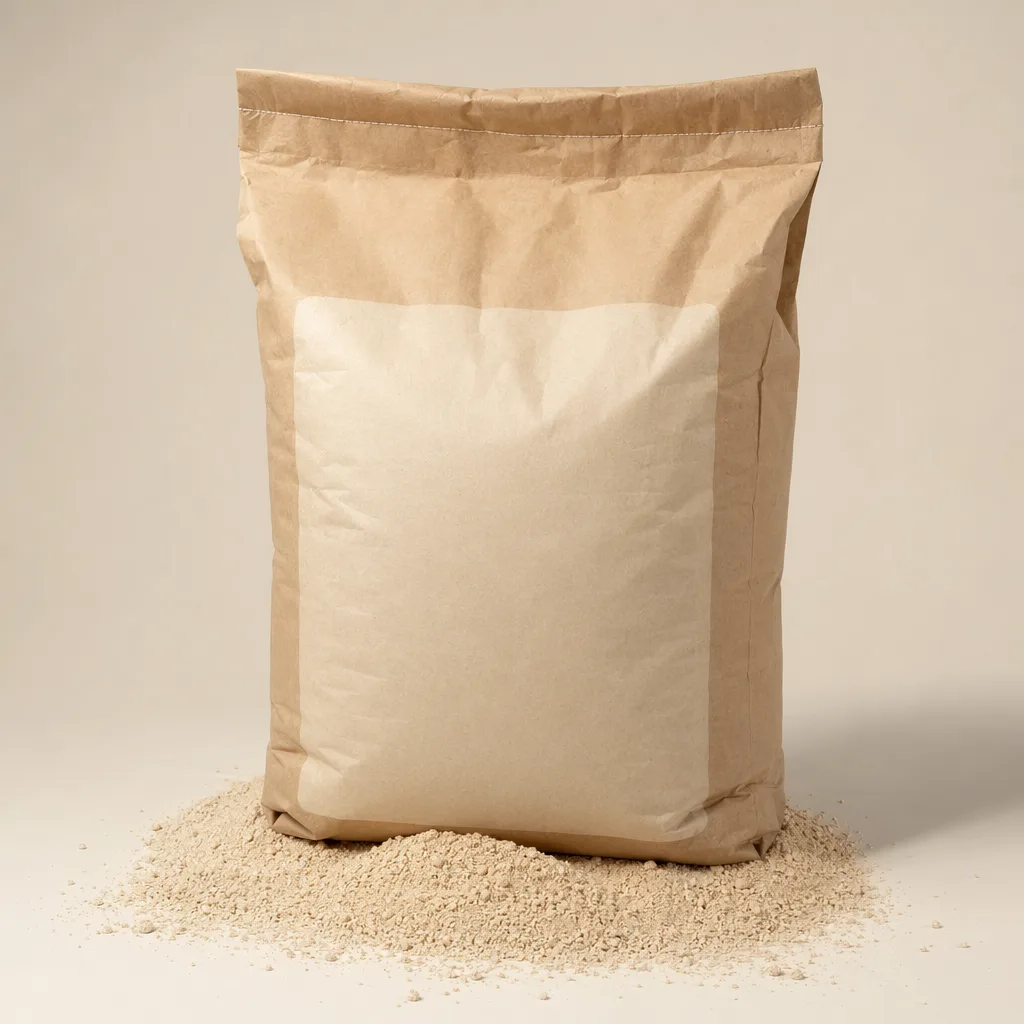
Complex Bread Baking Enzyme
Complex bread baking enzyme is a dry, food-processing enzyme blend formulated to improve dough handling, loaf volume, crumb structure, and processing consistency in industrial bakery lines. ArtemisYeast supplies ART-EN-033 in 25 kg multi-wall sacks for commercial bakeries, premix manufacturers, and flour improver blenders that require repeatable performance and documented quality. This item is inquiry-only, with wholesale pricing on request and batch documentation available for qualified bulk buyers.
- ✓ Free worldwide shipping
- ✓ ISO-aligned manufacturing
- ✓ Certificate of Analysis on request
- ✓ Bulk & custom volumes quoted on request
Overview
ART-EN-033 is a complex enzyme system for bread baking industrial applications, designed for controlled use in flour-based doughs. Typical functional components may include amylase, xylanase, and complementary carbohydrase activities selected to support starch and non-starch polysaccharide modification during mixing, proofing, and early baking. The result is improved machinability, gas retention, crumb softness, and production tolerance when the product is correctly dosed against flour characteristics and process conditions.
The product is supplied as a free-flowing powder in a 25 kg multi-wall sack. Typical technical targets include moisture not more than 10%, off-white to light tan powder appearance, pH working range about 4.5-6.5, and effective processing temperature generally 25-55°C before heat inactivation during baking. Particle size is commonly controlled for dry blending, for example not less than 95% passing 40 mesh, subject to final specification. Enzyme activity is batch-standardized and declared on the Certificate of Analysis rather than marketed by a single universal activity number, because the functional profile is matrix-dependent. Buyers comparing enzyme systems can review related processing aids in enzymes and fermentation ingredients.
Applications
- Industrial pan bread: supports dough strength balance, fermentation tolerance, loaf volume, and crumb uniformity on high-throughput lines.
- Sandwich bread and soft rolls: helps maintain soft eating texture and improved slice quality when used with validated emulsifier, oxidant, or improver systems.
- Flour improver premixes: suitable for blending into bakery improver concentrates where a low-inclusion enzyme component is required. Premixers should validate carrier compatibility, segregation risk, and enzyme distribution.
- Frozen and retarded dough systems: may be evaluated for dough extensibility and processing tolerance after chilled or frozen storage, with dosage adjusted through plant trials.
- Large-scale bakeries and central kitchens: provides a specification-driven ingredient for procurement teams seeking batch traceability, export documentation, and consistent sack format.
Indicative use levels are often in the range of 20-100 ppm on flour weight, but the correct addition rate depends on flour protein, damaged starch, pentosan level, formula, mixing energy, proof time, and final product style. ArtemisYeast recommends bench testing followed by line validation before commercial rollout. To discuss flour data, target claims, and lane requirements, submit a bulk quote on request with ART-EN-033 and expected monthly volume.
Storage and Handling
Store unopened sacks in a clean, dry, odor-free warehouse at 5-25°C, protected from sunlight, condensation, and high humidity. Keep away from strong oxidizing materials and segregate from non-food chemicals. Under recommended storage, typical shelf life is 12 months from manufacture; the confirmed retest or expiry date is printed on batch documentation.
As with all powdered enzymes, avoid dust generation and inhalation during weighing, charging, and premix manufacture. Use local exhaust ventilation where needed, keep containers closed after opening, and apply standard plant PPE such as gloves, protective eyewear, and an appropriate dust mask or respirator based on the site risk assessment. Reseal opened sacks tightly and use promptly to limit moisture pickup and activity loss.
Quality and Documentation
ART-EN-033 is supplied for food-processing use under controlled manufacturing and lot release procedures. Routine release checks may include appearance, moisture, activity profile, microbiological limits, heavy metals where applicable, and packaging integrity. A Certificate of Analysis is available on request for each shipped batch, and specifications can be aligned for recurring procurement contracts after qualification.
Documentation available on request may include product specification, allergen statement, food-grade declaration, Safety Data Sheet, non-GMO statement where applicable, and available food-safety system documents such as HACCP-aligned controls, ISO 22000, FSSC 22000, Halal, or Kosher certificates when relevant to the manufacturing site and batch. ArtemisYeast quality support can review import documents, labeling needs, and customer questionnaires through the quality and documentation process before shipment.
Storage & Handling
Refer to the CoA for product-specific storage conditions. Ship cold-chain where required.
Quality & Documentation
Manufactured under ISO-aligned quality management systems. Full documentation — Certificate of Analysis (CoA), Material Safety Data Sheet (MSDS), formulation summary, and stability data — is available on request. Email info@artemisyeast.com with the SKU.
About this product
01 What is the typical shelf life?
02 Do you offer documentation (CoA, food-grade declaration)?
03 What is the minimum order quantity?
04 Is bulk pricing available?
05 How is this product shipped internationally?
More from Enzymes & Fermentation Inputs

Protein and Nucleic Acid Processing Enzyme Powder
Industrial enzyme — protein & nucleic acid processing for food, feed, brewing, and biotechnology processing.

Industrial Alpha-Amylase Enzyme for Starch Processing
Industrial enzyme — α- amylase for food, feed, brewing, and biotechnology processing.

β-Glucanase Enzyme for Brewing, Baking and Feed
Industrial enzyme — β-glucanase for food, feed, brewing, and biotechnology processing.

β-Mannanase Enzyme for Food, Feed, and Brewing
Industrial enzyme — β-mannanase for food, feed, brewing, and biotechnology processing.