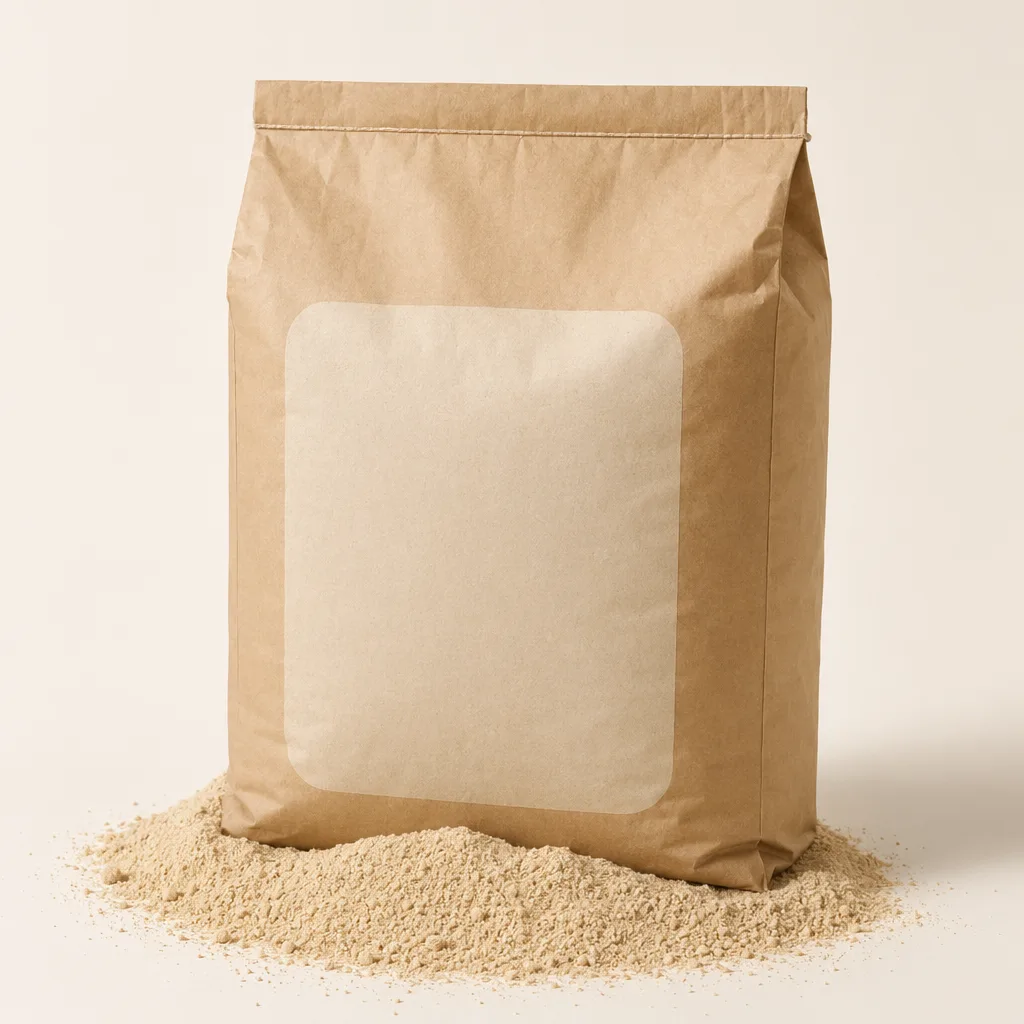
β-Mannanase Industrial Enzyme
β-Mannanase is an industrial carbohydrase enzyme that hydrolyzes β-1,4-mannan linkages in galactomannan, glucomannan, and related hemicellulose substrates. ArtemisYeast supplies ART-EN-004 for food processing, brewing operations, animal-feed manufacturing, and biotechnology workflows where controlled viscosity reduction and substrate conversion are required. The standard pack is a 25 kg multi-wall sack for plant-scale handling. Wholesale availability is inquiry-only, with bulk quote on request for qualified distributors, manufacturers, and contract processors.
- ✓ Free worldwide shipping
- ✓ ISO-aligned manufacturing
- ✓ Certificate of Analysis on request
- ✓ Bulk & custom volumes quoted on request
Overview
ART-EN-004 β-mannanase is a powdered industrial enzyme preparation designed for processing materials that contain mannan-rich gums, legumes, oilseed meals, cereal adjuncts, coffee extracts, and plant cell-wall fractions. The enzyme cleaves internal β-1,4-mannosidic bonds, reducing molecular weight and helping operators manage slurry viscosity, filtration resistance, extract yield, and process consistency. In bakery, brewing, and feed applications, the product is selected where mannan-based polysaccharides interfere with mixing, pumping, mash separation, or nutrient availability in formulated rations.
Typical commercial specifications may be set by purchase order and certificate of analysis, with enzyme activity commonly expressed in U/g, moisture typically controlled for dry-powder stability, and particle size adjusted for sack discharge and premix blending. A representative industrial grade may target 10,000-50,000 U/g depending on formulation and application route; final specification should be confirmed with ArtemisYeast before validation trials. For related fermentation aids and processing inputs, buyers can review the enzymes and fermentation category or submit process parameters for technical matching.
Applications
- Industrial bread baking: Supports dough systems that include guar, locust bean derivatives, soy flour, pulse flour, or other mannan-containing ingredients. R&D bakers may evaluate low inclusion rates for dough handling, crumb uniformity, and line tolerance, with dosage confirmed by flour quality, process time, and thermal profile.
- Brewing and distilling: Used in mashing or adjunct processing where plant gums raise wort viscosity or slow lautering and filtration. Head brewers can trial the enzyme with cereal adjuncts, specialty grains, or high-solids mashes to assess extract recovery, runoff behavior, and downstream clarification.
- Animal feed manufacturing: Applied in poultry, swine, ruminant, and aquaculture premixes that contain soybean meal, copra meal, palm kernel meal, guar meal, or other mannan-rich feedstuffs. Feed nutritionists typically specify enzyme activity, carrier compatibility, pelleting stability requirements, and blending uniformity before commercial adoption.
- Food and biotechnology processing: Useful for viscosity reduction in plant extracts, hydrocolloid processing, coffee and beverage streams, and fermentation feedstock preparation. Plant managers may specify the enzyme for batch or continuous systems where controlled hydrolysis improves pumping, heat transfer, membrane throughput, or solids separation.
Storage and Handling
Store unopened 25 kg multi-wall sacks in a clean, dry warehouse at 5-25 °C, away from direct sunlight, condensation, strong odors, oxidizing materials, and high humidity. Under recommended conditions, typical shelf life is 12-24 months, subject to activity grade, packaging, and the confirmed CoA. Reseal opened sacks immediately and consume promptly to limit moisture pickup and activity loss. Use first-in, first-out inventory control and avoid prolonged storage near steam lines, ovens, or outdoor loading areas.
As with most dry enzyme powders, avoid dust generation during charging, blending, and disposal of empty bags. Operators should use local exhaust ventilation where practical and wear suitable PPE, including gloves, eye protection, and a dust mask or respirator according to the site safety assessment. Do not mix directly with strong acids, alkalis, or sanitizers unless compatibility has been validated. For process qualification, request a sample protocol and bulk quote on request with target pH, temperature, residence time, substrate, and required activity grade.
Quality and Documentation
ArtemisYeast supplies ART-EN-004 for B2B use with lot traceability and specification review before shipment. Standard documentation can include certificate of analysis, product specification sheet, safety data sheet, allergen or GMO statement where applicable, country-of-origin details, packing list, and commercial invoice. Food-grade, feed-grade, Halal, Kosher, HACCP, ISO 22000, or FSSC 22000 documentation may be available on request depending on the manufacturing site and grade selected; buyers should confirm required files during quotation rather than after production scheduling.
Procurement teams can define activity tolerance, microbiological limits, heavy metals limits, mesh or granulation preference, packaging format, label language, and pallet configuration during onboarding. Technical review should include intended market, thermal exposure, processing pH, moisture conditions, and whether the enzyme will be used before or after heat treatment. ArtemisYeast supports inquiry-only sourcing, so there are no public price lists; wholesale pricing on request is provided after volume, destination, documentation, and specification requirements are confirmed. For audit preparation and document expectations, visit quality and compliance support.
Storage & Handling
Refer to the CoA for product-specific storage conditions. Ship cold-chain where required.
Quality & Documentation
Manufactured under ISO-aligned quality management systems. Full documentation — Certificate of Analysis (CoA), Material Safety Data Sheet (MSDS), formulation summary, and stability data — is available on request. Email info@artemisyeast.com with the SKU.
About this product
01 What is the typical shelf life?
02 Do you offer documentation (CoA, food-grade declaration)?
03 What is the minimum order quantity?
04 Is bulk pricing available?
05 How is this product shipped internationally?
More from Enzymes & Fermentation Inputs

Protein and Nucleic Acid Processing Enzyme Powder
Industrial enzyme — protein & nucleic acid processing for food, feed, brewing, and biotechnology processing.
Industrial Alpha-Amylase Enzyme for Starch Processing
Industrial enzyme — α- amylase for food, feed, brewing, and biotechnology processing.
β-Glucanase Enzyme for Brewing, Baking and Feed
Industrial enzyme — β-glucanase for food, feed, brewing, and biotechnology processing.
Cellulase Enzyme for Food, Feed, Brewing Processing
Industrial enzyme — cellulase for food, feed, brewing, and biotechnology processing.