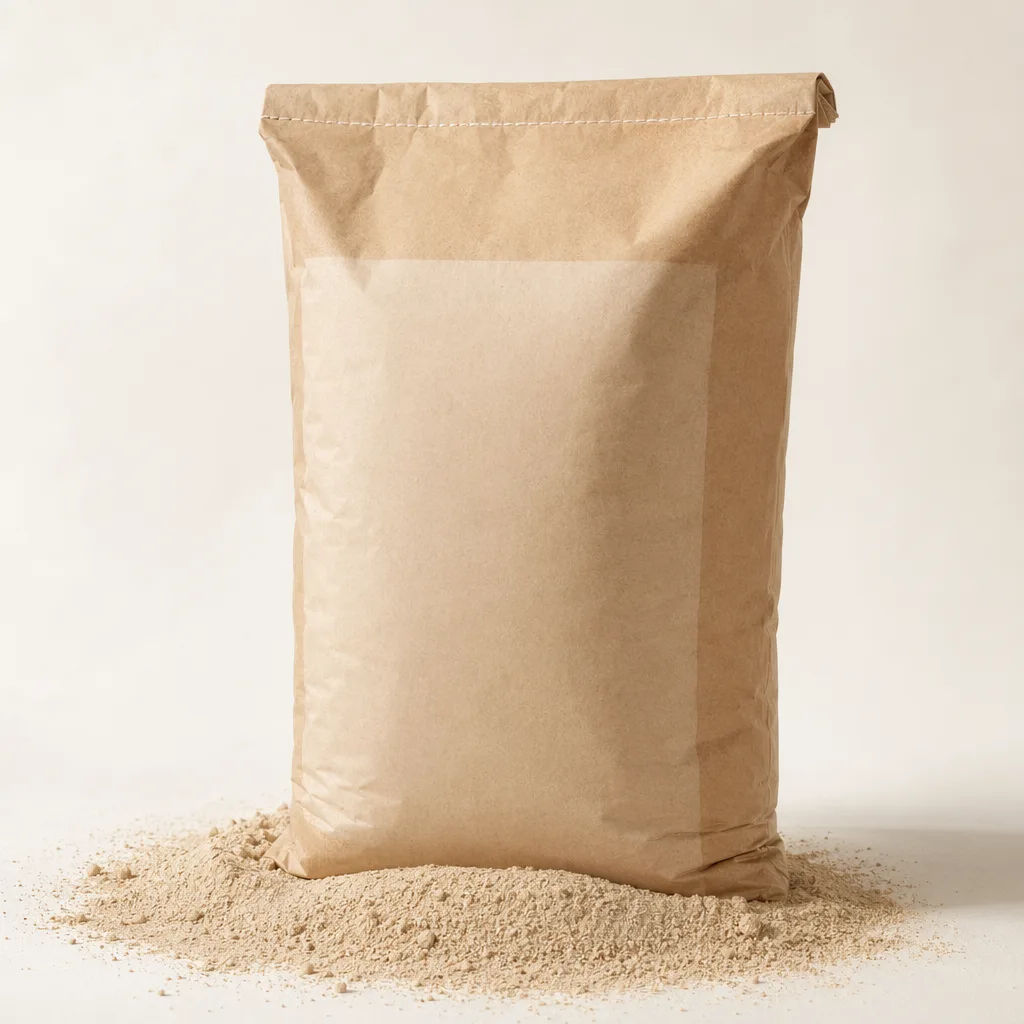
Gluco-Amylase for Animal Feed
Gluco-amylase for animal feed is an industrial carbohydrase enzyme that hydrolyzes gelatinized or accessible starch into glucose and smaller fermentable sugars. ART-EN-038 is supplied for feed-mill, premix, and livestock nutrition programs that require controlled starch conversion during processing. It is suitable for B2B procurement in 25 kg multi-wall sacks, with wholesale pricing on request. Typical use is specified by enzyme activity, process pH, temperature, substrate, inclusion rate, and documentation requirements rather than by CFU/g.
- ✓ Free worldwide shipping
- ✓ ISO-aligned manufacturing
- ✓ Certificate of Analysis on request
- ✓ Bulk & custom volumes quoted on request
Overview
ART-EN-038 is a powdered gluco-amylase enzyme preparation for animal-feed-livestock applications, especially where starch-rich raw materials are used in mash feed, pelleted feed, liquid feed, or premix systems. Gluco-amylase, also known as amyloglucosidase, acts mainly on alpha-1,4 glycosidic bonds and can also hydrolyze some alpha-1,6 branch points, releasing glucose from the non-reducing ends of dextrins. This makes it useful in process designs that target more complete starch breakdown after milling, cooking, conditioning, or other heat-moisture steps.
Typical commercial specifications may include declared enzyme activity such as 50,000-150,000 U/g or another agreed activity basis, moisture not more than 8%, light tan to brown powder appearance, and particle size commonly passing 40-80 mesh depending on grade. The enzyme is not a live yeast product; no CFU/g specification applies. Performance is usually strongest in mildly acidic systems, with typical operating ranges around pH 4.0-5.5 and 50-65 °C, subject to substrate and residence time. For related processing aids, visit enzymes and fermentation ingredients.
Applications
- Livestock feed processing: supports starch conversion in corn, wheat, cassava, sorghum, barley, and other carbohydrate-rich formulations used for swine, poultry, ruminant, and aquaculture feed programs.
- Premix and additive blending: can be incorporated into dry enzyme premixes when carrier compatibility, dust control, and activity retention are validated by the formulator.
- Pelleting and conditioning systems: may be evaluated where temperature, moisture, and retention time are compatible with the declared enzyme stability profile.
- Liquid feed and steeping operations: helps convert dextrins to fermentable sugars when low-pH, warm-process conditions are used.
- R&D and formulation trials: suitable for bench-scale digestion models, feed conversion studies, and pilot batches where the objective is process functionality, not clinical positioning.
Recommended dosage depends on starch level, feed matrix, conditioning temperature, pH, moisture, and target activity contribution. Procurement and technical teams can request a bulk quote with target activity, annual volume, packaging preference, and destination port.
Storage and Handling
Supply format is a 25 kg multi-wall sack with inner liner, palletized for export handling where required. Store sealed in a cool, dry, ventilated warehouse, ideally below 25 °C and away from direct sunlight, steam lines, strong oxidizers, and high humidity. Typical shelf life is 12-24 months from manufacture when stored in unopened original packaging, subject to the confirmed grade and CoA. After opening, reseal promptly and use first-in, first-out inventory control.
As with other enzyme powders, avoid generating airborne dust. Operators should use local exhaust ventilation and appropriate plant PPE according to the site safety assessment. Do not mix directly with highly alkaline materials or expose the product to prolonged high heat unless stability has been validated in the final process.
Quality and Documentation
ArtemisYeast supplies ART-EN-038 for industrial B2B use with specification review before order confirmation. Available documents may include certificate of analysis, product specification, safety data sheet, allergen statement, GMO-status statement where applicable, food/feed-grade declaration, and country-of-origin documentation. Manufacturing documentation can be reviewed for HACCP-aligned controls and, where applicable to the production site and lot, ISO 22000, FSSC 22000, Halal, or Kosher documentation available on request.
Incoming quality checks may include activity assay, moisture, appearance, odor, bulk density, particle size, and microbiological indicators appropriate to feed enzyme products. Lot traceability is maintained from production through export shipment. For audit expectations and document workflow, see the quality and documentation page or include your required test panel in the inquiry.
Storage & Handling
Refer to the CoA for product-specific storage conditions. Ship cold-chain where required.
Quality & Documentation
Manufactured under ISO-aligned quality management systems. Full documentation — Certificate of Analysis (CoA), Material Safety Data Sheet (MSDS), formulation summary, and stability data — is available on request. Email info@artemisyeast.com with the SKU.
About this product
01 What is the typical shelf life?
02 Do you offer documentation (CoA, food-grade declaration)?
03 What is the minimum order quantity?
04 Is bulk pricing available?
05 How is this product shipped internationally?
More from Enzymes & Fermentation Inputs

Protein and Nucleic Acid Processing Enzyme Powder
Industrial enzyme — protein & nucleic acid processing for food, feed, brewing, and biotechnology processing.
Industrial Alpha-Amylase Enzyme for Starch Processing
Industrial enzyme — α- amylase for food, feed, brewing, and biotechnology processing.

β-Glucanase Enzyme for Brewing, Baking and Feed
Industrial enzyme — β-glucanase for food, feed, brewing, and biotechnology processing.
β-Mannanase Enzyme for Food, Feed, and Brewing
Industrial enzyme — β-mannanase for food, feed, brewing, and biotechnology processing.