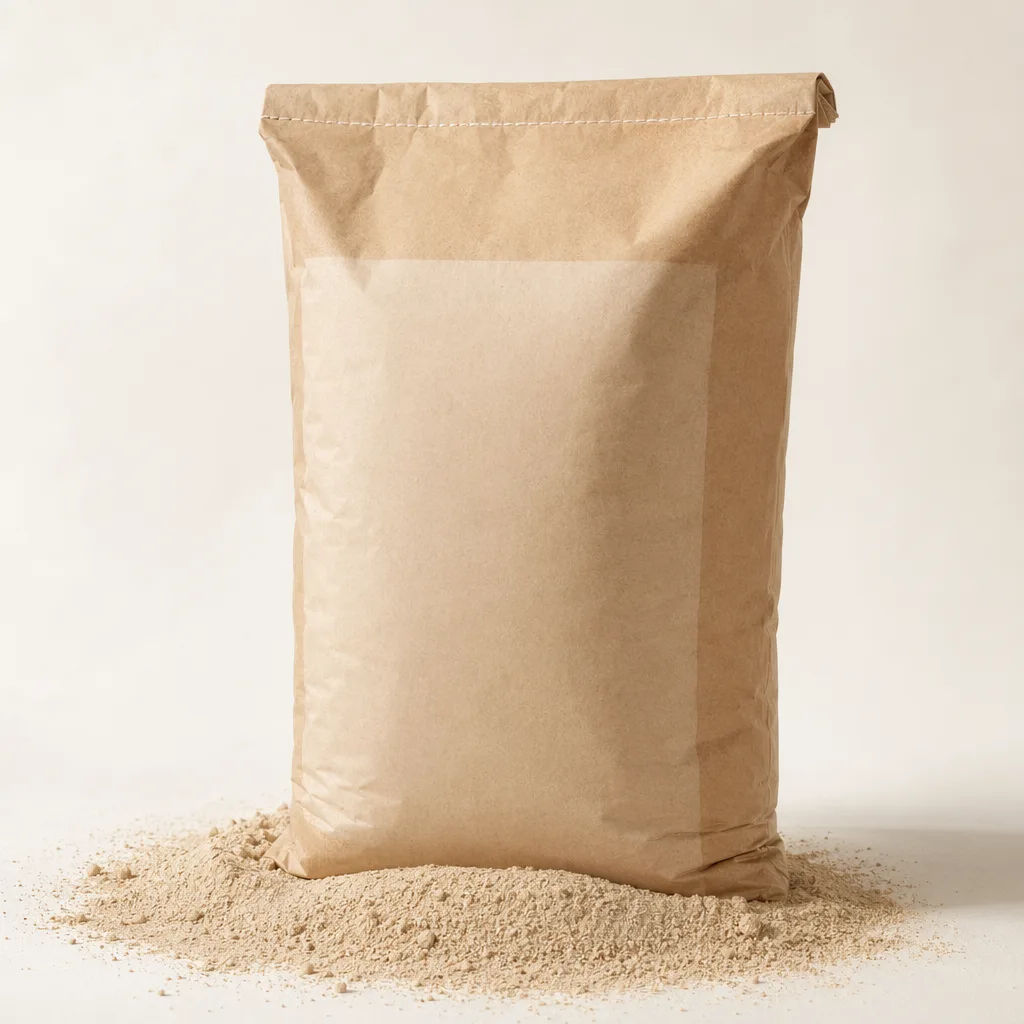
Gluco-Amylase Enzyme
Gluco-amylase is an industrial saccharifying enzyme that hydrolyzes starch dextrins into fermentable glucose for baking, brewing, feed, and biotechnology processing. ArtemisYeast supplies ART-EN-007 in 25 kg multi-wall sacks for plants that require consistent enzyme activity, practical handling, and export-ready documentation. This product is offered on an inquiry-only basis, with wholesale pricing on request for qualified bulk buyers.
- ✓ Free worldwide shipping
- ✓ ISO-aligned manufacturing
- ✓ Certificate of Analysis on request
- ✓ Bulk & custom volumes quoted on request
Overview
ART-EN-007 is a food and process enzyme grade gluco-amylase designed for starch conversion in industrial fermentation and grain-processing workflows. It acts mainly on alpha-1,4 glycosidic bonds and can also hydrolyze alpha-1,6 branch points more slowly, converting liquefied starch, dextrins, and maltodextrins into glucose. It is typically used after starch gelatinization and liquefaction, where alpha-amylase has already reduced viscosity and opened the substrate for saccharification.
Typical specification targets may include powder form, 25 kg multi-wall sack packaging, enzyme activity such as 100,000 U/g by agreed assay, moisture not more than 8%, and a fine free-flowing particle profile suitable for plant dosing systems. Operating conditions are process-dependent; gluco-amylase commonly performs in the pH 4.0-4.5 range and at approximately 55-60 °C during saccharification. Procurement teams can review related enzyme inputs in enzymes and fermentation ingredients and request grade matching for bakery, brewery, feed, or biotechnology use.
Applications
- Industrial bread baking: Used in flour and dough systems where controlled starch breakdown supports yeast-available sugar, fermentation consistency, crust color development, and process tolerance. Dosage should be validated by bake trials because flour amylase level, fermentation time, sugar formula, and proofing temperature strongly affect performance.
- Craft and industrial brewing: Applied in adjunct mashes, high-gravity brewing, and highly attenuated beer production to increase glucose availability after liquefaction. It can help brewers manage final gravity and extract utilization when used with defined mash pH, temperature, and contact time.
- Animal feed and livestock processing: Used by feed mills and premix manufacturers in starch-rich grain processing where saccharification or pre-processing of cereal substrates is required. It is suitable for inclusion in process aids or custom enzyme blends when formulation stability and declared activity are confirmed.
- Biotechnology and fermentation substrates: Supports preparation of glucose-rich feedstocks for microbial fermentation, yeast propagation, organic acid production, and other non-clinical bioprocessing applications. R&D teams should confirm substrate solids, dextrose equivalent targets, residual dextrin profile, and downstream compatibility.
Storage and Handling
Store sealed sacks in a cool, dry, well-ventilated warehouse away from direct sunlight, condensation, strong odors, and alkaline materials. Recommended storage is below 25 °C with relative humidity controlled to prevent caking and activity loss. When stored in the original unopened package under recommended conditions, typical shelf life is up to 12 months, subject to the product CoA and shipping lane conditions.
Use dust control, gloves, and eye protection when charging powder into hoppers, premixers, or slurry tanks. Avoid aerosol generation and prolonged exposure to high heat before the intended process step. Once opened, reseal promptly and consume as soon as practical. For plant-scale introduction, ArtemisYeast recommends a documented trial plan covering substrate dry solids, enzyme dosage, residence time, target glucose yield, and hold temperature.
Quality and Documentation
Each lot of ART-EN-007 can be supplied with a certificate of analysis showing agreed parameters such as enzyme activity, appearance, moisture, and microbiological indicators where applicable. Food-grade declaration, allergen statement, non-GMO statement, Halal, Kosher, HACCP, ISO 22000, or FSSC 22000 documentation may be available on request depending on the manufacturing site and shipment lot; buyers should confirm required documents before purchase order release.
ArtemisYeast supports procurement qualification with specification review, sample coordination where available, export packing information, and batch traceability. For audit files and supplier onboarding, see our quality documentation process. For volume planning, annual tenders, or trial quantities, submit an inquiry through request a bulk quote; wholesale pricing on request is provided after grade, destination, documentation, and shipment volume are confirmed.
Storage & Handling
Refer to the CoA for product-specific storage conditions. Ship cold-chain where required.
Quality & Documentation
Manufactured under ISO-aligned quality management systems. Full documentation — Certificate of Analysis (CoA), Material Safety Data Sheet (MSDS), formulation summary, and stability data — is available on request. Email info@artemisyeast.com with the SKU.
About this product
01 What is the typical shelf life?
02 Do you offer documentation (CoA, food-grade declaration)?
03 What is the minimum order quantity?
04 Is bulk pricing available?
05 How is this product shipped internationally?
More from Enzymes & Fermentation Inputs

Protein and Nucleic Acid Processing Enzyme Powder
Industrial enzyme — protein & nucleic acid processing for food, feed, brewing, and biotechnology processing.
Industrial Alpha-Amylase Enzyme for Starch Processing
Industrial enzyme — α- amylase for food, feed, brewing, and biotechnology processing.
β-Glucanase Enzyme for Brewing, Baking and Feed
Industrial enzyme — β-glucanase for food, feed, brewing, and biotechnology processing.
β-Mannanase Enzyme for Food, Feed, and Brewing
Industrial enzyme — β-mannanase for food, feed, brewing, and biotechnology processing.