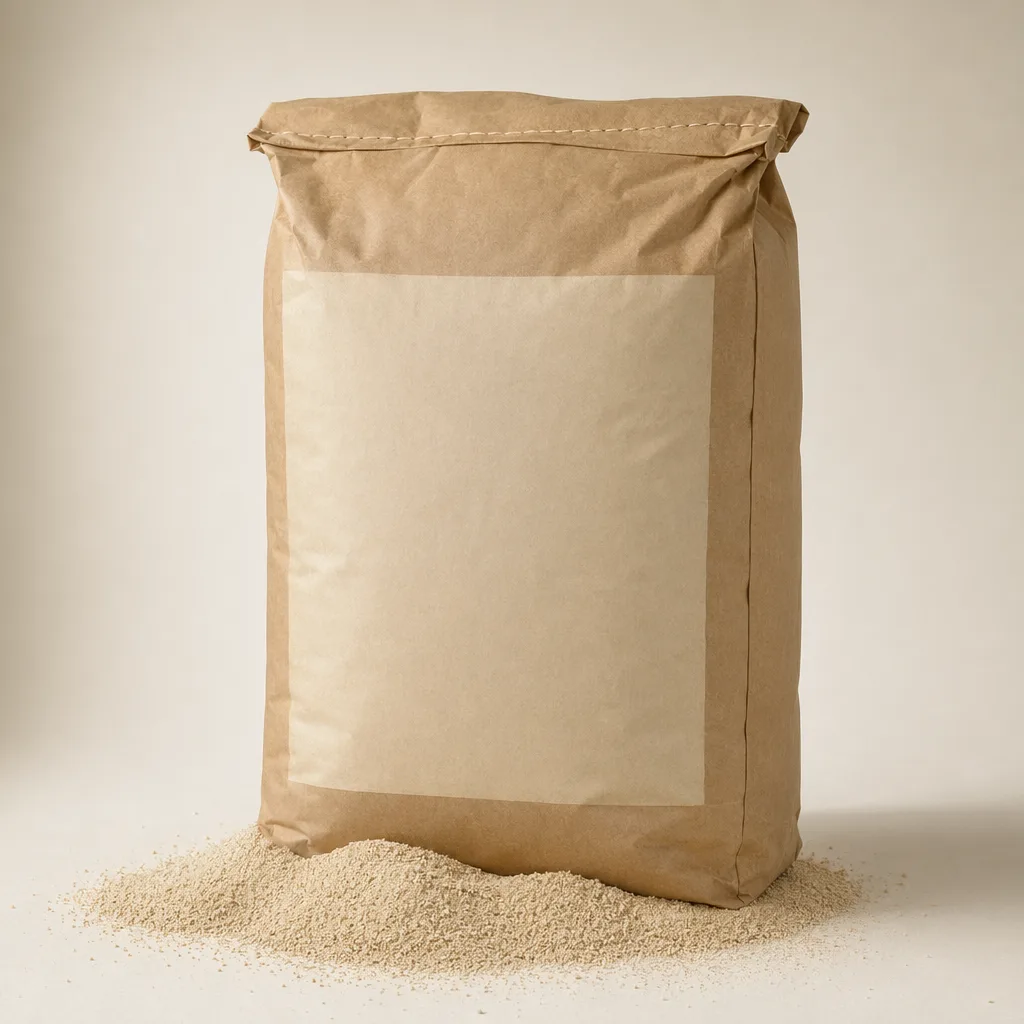
Maltogenic Amylase for Craft Brewing
Maltogenic amylase is a food-processing enzyme that hydrolyzes starch dextrins to increase maltose formation and support controlled wort fermentability. ART-EN-052 is supplied for craft breweries and industrial beverage plants requiring consistent mash performance, attenuation control, and recipe repeatability. ArtemisYeast offers this enzyme in 25 kg multi-wall sacks for inquiry-only procurement, with wholesale pricing on request and technical matching for brewhouse conditions, adjunct level, and target beer profile.
- ✓ Free worldwide shipping
- ✓ ISO-aligned manufacturing
- ✓ Certificate of Analysis on request
- ✓ Bulk & custom volumes quoted on request
Overview
ART-EN-052 maltogenic amylase is an industrial brewing enzyme used during mashing or starch-conversion operations where brewers need more predictable dextrin breakdown and fermentable sugar balance. The enzyme acts mainly on alpha-1,4 glucosidic linkages in gelatinized starch and dextrins, releasing maltose and smaller saccharides that brewing yeast can metabolize. It is suited to all-malt beers, high-adjunct grists, specialty dry-finish recipes, low-residual-sweetness styles, and process trials where brewhouse extract and final attenuation must be held within specification.
Typical supply format is a light tan to brown free-flowing enzyme powder or granule in 25 kg multi-wall sacks. Common specification targets include moisture not more than 8%, activity declared by lot on the certificate of analysis, and a practical working window around pH 4.5-6.0 with activity often applied in the 50-65 °C mash range, subject to the exact formulation and plant validation. This is a non-living enzyme preparation; CFU/g specifications used for active dry yeast do not apply. For adjacent processing aids, see the enzymes and fermentation category.
Applications
- Craft brewing mash conversion: supports conversion consistency when malt diastatic power, grist ratio, or seasonal raw material quality varies.
- Adjunct and specialty grain brewing: assists fermentability management in recipes using maize, rice, wheat, oats, sorghum, or other starch-bearing inputs after proper gelatinization.
- Dry-finish beer development: enables R&D teams to tune residual extract, apparent attenuation, and mouthfeel without relying only on mash temperature shifts.
- High-gravity brewing: helps brewers manage wort fermentability before dilution, supporting more consistent yeast performance and tank utilization.
- Process standardization: suitable for breweries moving from pilot batches to repeatable production, where enzyme dosage, contact time, temperature, and pH are documented in the batch sheet.
- Food and biotechnology processing: available for non-brewing starch conversion projects where a maltose-oriented amylase profile is required; request application review before scale-up.
Storage and Handling
Store unopened sacks in a cool, dry, ventilated warehouse, typically below 25 °C and away from direct sunlight, steam lines, and high-humidity areas. Keep the bag tightly sealed after opening and avoid repeated exposure to ambient moisture, because enzyme powders can lose activity over time when exposed to heat or water vapor. Typical shelf life is 12 months from manufacture under recommended storage, with actual retest or expiry date shown on lot documents.
Operators should use normal powder-handling controls, including local extraction where dust may form, eye protection, gloves, and masks or respirators as required by the plant safety assessment. Add the enzyme according to validated brewhouse procedure, ensuring uniform dispersion in mash or slurry. Dose rate should be confirmed by bench trial, pilot brew, and sensory review before commercial release.
Quality and Documentation
ArtemisYeast supplies ART-EN-052 for B2B users requiring lot traceability, specification review, and export-ready documentation. A certificate of analysis can list appearance, activity method, moisture, microbiological limits where applicable, and production lot details. Safety data sheet, allergen statement, food-grade declaration, non-GMO statement, Halal or Kosher documents, and HACCP, ISO 22000, or FSSC 22000-related documentation may be available on request depending on origin and lot.
Procurement teams can review documentation through our quality and documentation process before purchase approval. For sampling, recurring supply, or plant-level qualification, submit your target beer style, grist bill, mash profile, annual volume, and destination port through the bulk quote request form. Wholesale pricing on request is provided after technical and logistics review.
Storage & Handling
Refer to the CoA for product-specific storage conditions. Ship cold-chain where required.
Quality & Documentation
Manufactured under ISO-aligned quality management systems. Full documentation — Certificate of Analysis (CoA), Material Safety Data Sheet (MSDS), formulation summary, and stability data — is available on request. Email info@artemisyeast.com with the SKU.
About this product
01 What is the typical shelf life?
02 Do you offer documentation (CoA, food-grade declaration)?
03 What is the minimum order quantity?
04 Is bulk pricing available?
05 How is this product shipped internationally?
More from Enzymes & Fermentation Inputs

Protein and Nucleic Acid Processing Enzyme Powder
Industrial enzyme — protein & nucleic acid processing for food, feed, brewing, and biotechnology processing.
Industrial Alpha-Amylase Enzyme for Starch Processing
Industrial enzyme — α- amylase for food, feed, brewing, and biotechnology processing.
β-Glucanase Enzyme for Brewing, Baking and Feed
Industrial enzyme — β-glucanase for food, feed, brewing, and biotechnology processing.
β-Mannanase Enzyme for Food, Feed, and Brewing
Industrial enzyme — β-mannanase for food, feed, brewing, and biotechnology processing.