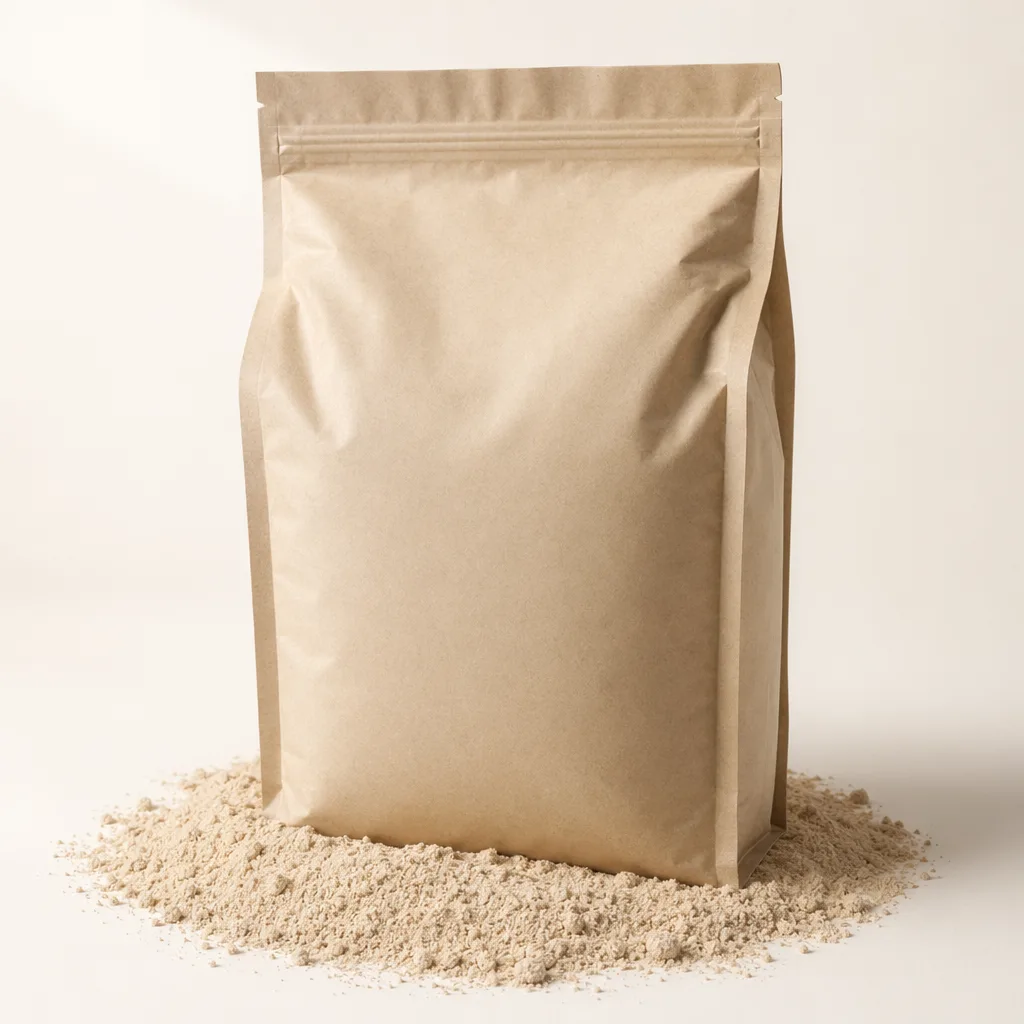
Fermentation Nutrients and Protectors
Nutrients and protectors are dry fermentation aids formulated to support yeast performance in beer, wine, spirits, and industrial alcohol production. ART-BW-008 is supplied by ArtemisYeast in 10 kg foil pouches for craft and industrial users that need consistent dispersion, defined handling, and lot-level documentation. The product is available for wholesale supply by inquiry, with bulk quote on request for breweries, wineries, distilleries, bioethanol plants, and contract fermentation facilities.
- ✓ Free worldwide shipping
- ✓ ISO-aligned manufacturing
- ✓ Certificate of Analysis on request
- ✓ Bulk & custom volumes quoted on request
Overview
ART-BW-008 is a dry nutrient and protector blend for fermentation processes where yeast may face high gravity wort, low nitrogen must, osmotic pressure, ethanol stress, temperature variation, or nutrient-limited substrates. It is designed for use as a process input rather than a finished beverage ingredient claim. Typical functional components may include inactivated yeast derivatives, yeast hull fractions, assimilable nitrogen sources, mineral carriers, and vitamin co-factors selected to improve yeast vitality, nutrient balance, and fermentation completion under demanding production conditions.
Typical procurement specifications can be aligned by application and may include light tan to beige powder or fine granule appearance, characteristic yeast-derived odor, moisture not more than 8.0%, crude protein commonly 35-50% on dry basis depending on formula, ash commonly 6-12%, and particle size such as 80 mesh pass rate not less than 90% where fine dispersion is required. For live yeast nutrients, viable yeast count is not normally the key release parameter; the focus is nutrient composition, microbiological limits, heavy metals, solubility or suspendability, and sensory neutrality in the target matrix. For related beverage fermentation inputs, see our brewing and winemaking yeast category.
Applications
- Craft brewing: Used in high-gravity ales, lagers, sour beer bases, hard seltzer ferments, and adjunct-heavy wort where free amino nitrogen and micronutrient balance may be low. Plant teams commonly dose during kettle knockout, oxygenation, or early fermentation according to recipe validation.
- Winemaking: Suitable for grape, fruit, and honey-based fermentations where must nitrogen varies by season, region, and cultivar. R&D winemakers can evaluate staged addition for steady fermentation kinetics while monitoring yeast assimilable nitrogen, volatile acidity, and sensory impact.
- Distilled spirits: Applied in grain, molasses, cane, fruit, and alternative carbohydrate mashes to support yeast activity through high solids, variable mineral load, and elevated ethanol concentration. Distilleries should validate dosage against attenuation, fermentation time, and downstream distillation profile.
- Bioethanol and industrial fermentation: Used as a bulk nutrient and stress-management input for carbohydrate feedstocks where consistent conversion, predictable cycle time, and process robustness are procurement priorities. Recommended addition rates are established by substrate analysis, strain selection, and plant trials.
- Technical dosing guidance: Common bench-screening ranges are 10-40 g/hL for beverages and 0.05-0.30 g/L for industrial ferments, subject to local regulations and internal specifications. ArtemisYeast can support documentation review and sample planning before scale-up; submit a bulk quote on request with substrate type, target alcohol, and annual volume.
Storage and Handling
ART-BW-008 is packed in 10 kg foil pouches to limit moisture uptake and protect flowability during storage and international transport. Store sealed product in a cool, dry, clean warehouse at 5-25 °C, away from direct sunlight, steam lines, strong odors, and oxidizing chemicals. After opening, reseal the pouch or transfer to a closed food-grade container and use promptly to maintain powder quality. Avoid introducing wet scoops or condensate into the pouch.
Typical shelf life is 24 months from manufacture when stored under recommended conditions and when the original packaging remains intact. The product should be weighed accurately, dispersed in clean process water or added directly at a validated process point, depending on the production protocol. Operators should follow site procedures for dust control, allergen review, personal protective equipment, and segregation from non-food chemicals. Do not use if packaging is damaged, contaminated, or exposed to excessive moisture during storage.
Quality and Documentation
ArtemisYeast supplies ART-BW-008 for professional fermentation users that require traceable lots, consistent packaging, and documentation suitable for supplier approval. Standard release documents can include certificate of analysis, specification sheet, ingredient statement, country of origin, safety data sheet where applicable, and food-grade declaration. Microbiological criteria may include total plate count, yeast and mold, coliforms, and absence testing for specified pathogens according to the agreed specification.
Manufacturing and supply-chain documentation is available on request for HACCP-aligned production, ISO 22000, FSSC 22000, Halal, Kosher, and other food-safety or market-access files where applicable to the production lot and site. Buyers should confirm required documentation before purchase order placement, especially for alcoholic beverage, export, feed-adjacent, or industrial alcohol use. ArtemisYeast also supports pre-shipment document checks, retained sample coordination, and packaging photos for containerized orders. Review our quality documentation approach for supplier qualification and audit-file planning.
Storage & Handling
Refer to the CoA for product-specific storage conditions. Ship cold-chain where required.
Quality & Documentation
Manufactured under ISO-aligned quality management systems. Full documentation — Certificate of Analysis (CoA), Material Safety Data Sheet (MSDS), formulation summary, and stability data — is available on request. Email info@artemisyeast.com with the SKU.
About this product
01 What is the typical shelf life?
02 Do you offer documentation (CoA, food-grade declaration)?
03 What is the minimum order quantity?
04 Is bulk pricing available?
05 How is this product shipped internationally?
More from Brewing & Winemaking Yeast
Super Turbo Yeast for High-Gravity Fermentation
Active dry super turbo yeast for craft brewers, winemakers, distillers, and industrial fermentation.
Dry Winemaking Enzyme for Fermentation Processing
Active dry winemaking enzyme for craft brewers, winemakers, distillers, and industrial fermentation.
Super Turbo Yeast for Craft Brewing, 10 kg Pouch
Super Turbo Yeast for craft brewing applications. Active dry super turbo yeast for craft brewers, winemakers,…
Super Turbo Yeast for Winemaking, 10 kg Foil Pouch
Super Turbo Yeast for winemaking applications. Active dry super turbo yeast for craft brewers, winemakers, dis…