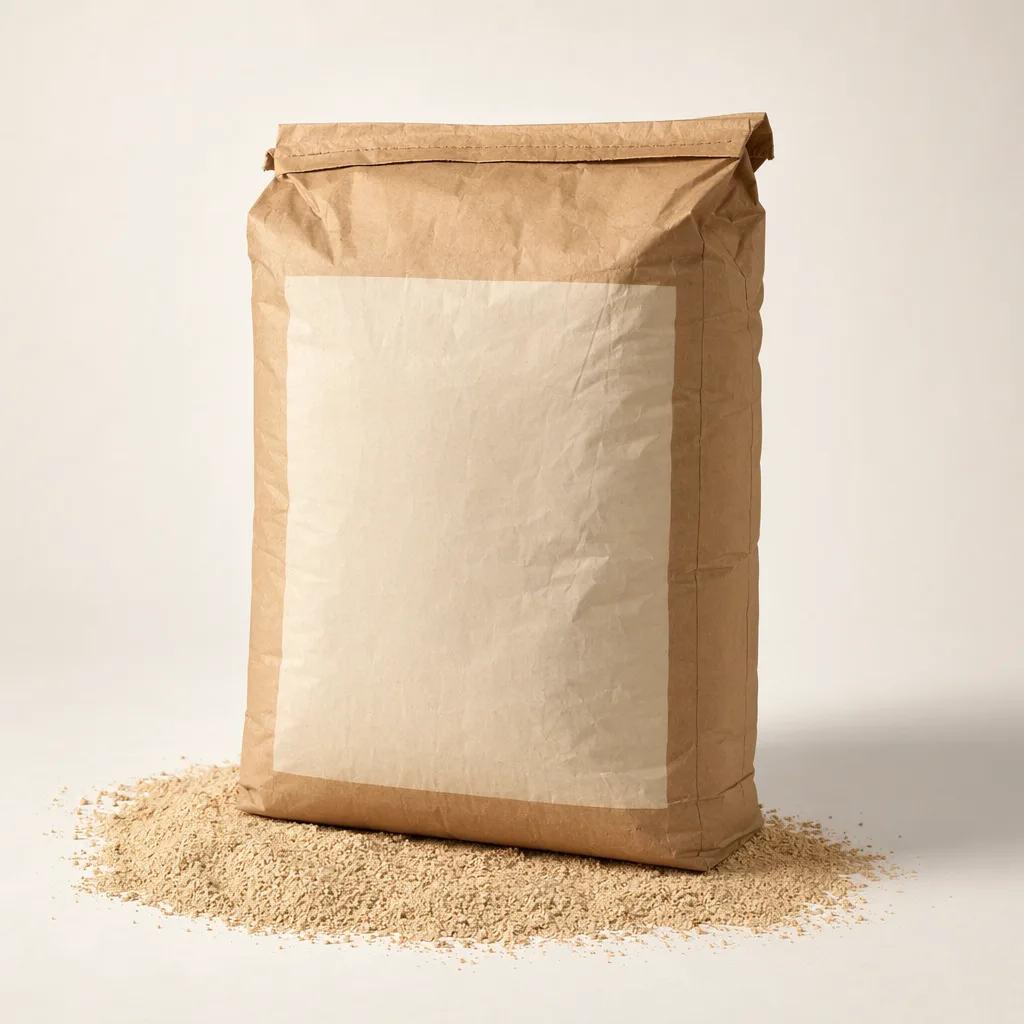
Industrial Bread Protease Enzyme
Industrial bread protease is a food-processing enzyme used to modify gluten proteins and improve dough extensibility in large-scale bakery production. ART-EN-060 is supplied for industrial bakers, premix manufacturers, and fermentation processors requiring controlled proteolytic activity, consistent dispersion, and documentation for plant QA review. ArtemisYeast offers this product in 25 kg multi-wall sacks for inquiry-only supply, with wholesale pricing on request and technical support for specification matching.
- ✓ Free worldwide shipping
- ✓ ISO-aligned manufacturing
- ✓ Certificate of Analysis on request
- ✓ Bulk & custom volumes quoted on request
Overview
ART-EN-060 is an industrial protease preparation for bread baking applications where dough relaxation, machining tolerance, and texture consistency are important. In wheat dough systems, protease hydrolyzes selected peptide bonds in gluten proteins, reducing excessive dough strength and improving sheetability, rounding, moulding, and proofing behavior. It is commonly evaluated in pan bread, buns, rolls, pizza bases, crackers, laminated doughs, and dry bakery premixes where flour strength varies by origin or season.
The product is supplied as a free-flowing powder suitable for blending into flour improvers or direct addition through controlled micro-dosing systems. Typical specification targets may include enzyme activity adjusted to customer process requirements, moisture not more than 8%, light tan to off-white powder appearance, and particle size commonly passing 80 mesh, subject to final grade confirmation. For related fermentation processing inputs, buyers can review the enzymes and fermentation category or submit application parameters through bulk quote on request.
Applications
- Industrial bread lines: Supports controlled dough relaxation in high-speed mixing, dividing, sheeting, and moulding operations, especially when strong flour causes shrink-back or poor pan flow.
- Flour improver and premix manufacturing: Can be dry blended with oxidants, emulsifiers, ascorbic acid systems, fungal alpha-amylase, xylanase, or yeast nutrients after compatibility testing.
- Cracker and biscuit production: Helps reduce dough elasticity for smoother sheeting and more uniform gauge control, supporting consistent bake geometry and reduced mechanical stress.
- Frozen and par-baked dough: May be trialed to balance dough handling after mixing, resting, freezing, thawing, and final proofing; dosage should be validated against yeast activity and proof time.
- Brewing and fermentation processing: In non-bakery applications, protease may assist protein modification in cereal-based mashes or nutrient preparation where a food-grade processing aid is required.
- Feed and bioprocess inputs: Available for qualified industrial evaluation where proteolysis of plant or microbial protein substrates is part of the manufacturing workflow.
Storage and Handling
Store ART-EN-060 in the original sealed 25 kg multi-wall sack in a clean, dry, odor-free warehouse. Recommended storage is 5-25 °C with relative humidity controlled below 65%. Keep away from direct sunlight, steam lines, wet floors, and strong oxidizing materials. Under recommended storage, typical shelf life is 12 months from manufacturing date; activity retention should be verified by CoA and internal acceptance testing.
Enzyme powders can form airborne dust during dumping, weighing, or blending. Operators should use local exhaust ventilation and suitable PPE, including gloves, protective eyewear, and a dust mask or respirator where exposure risk exists. Reseal partly used sacks immediately and avoid cross-contamination with allergens, flavors, colors, or incompatible enzyme concentrates. For bakery trials, start with low-dose bench testing, then pilot-plant validation before full production. Typical use levels are often expressed in ppm on flour weight or as activity units per kilogram of flour, depending on the final standardized activity.
Quality and Documentation
ArtemisYeast supplies ART-EN-060 for B2B customers requiring traceable lots, specification review, and import-ready documentation. Available documentation may include certificate of analysis, technical data sheet, safety data sheet, allergen statement, GMO status statement where applicable, food-grade declaration, country-of-origin details, and packing list. Manufacturing and packing documentation can be reviewed against HACCP-aligned controls, ISO 22000, FSSC 22000, Halal, or Kosher requirements where documentation is available for the confirmed lot.
Procurement and R&D teams should provide target application, flour type, process pH, dough temperature, mixing time, proofing profile, desired functionality, and any prohibited carriers or allergens. ArtemisYeast can coordinate specification matching for enzyme activity range, carrier system, mesh size, microbiological limits, heavy metals, and packaging configuration. See our quality documentation approach for more information, or request a sample and wholesale pricing on request for ART-EN-060.
Storage & Handling
Refer to the CoA for product-specific storage conditions. Ship cold-chain where required.
Quality & Documentation
Manufactured under ISO-aligned quality management systems. Full documentation — Certificate of Analysis (CoA), Material Safety Data Sheet (MSDS), formulation summary, and stability data — is available on request. Email info@artemisyeast.com with the SKU.
About this product
01 What is the typical shelf life?
02 Do you offer documentation (CoA, food-grade declaration)?
03 What is the minimum order quantity?
04 Is bulk pricing available?
05 How is this product shipped internationally?
More from Enzymes & Fermentation Inputs

Protein and Nucleic Acid Processing Enzyme Powder
Industrial enzyme — protein & nucleic acid processing for food, feed, brewing, and biotechnology processing.
Industrial Alpha-Amylase Enzyme for Starch Processing
Industrial enzyme — α- amylase for food, feed, brewing, and biotechnology processing.
β-Glucanase Enzyme for Brewing, Baking and Feed
Industrial enzyme — β-glucanase for food, feed, brewing, and biotechnology processing.
β-Mannanase Enzyme for Food, Feed, and Brewing
Industrial enzyme — β-mannanase for food, feed, brewing, and biotechnology processing.