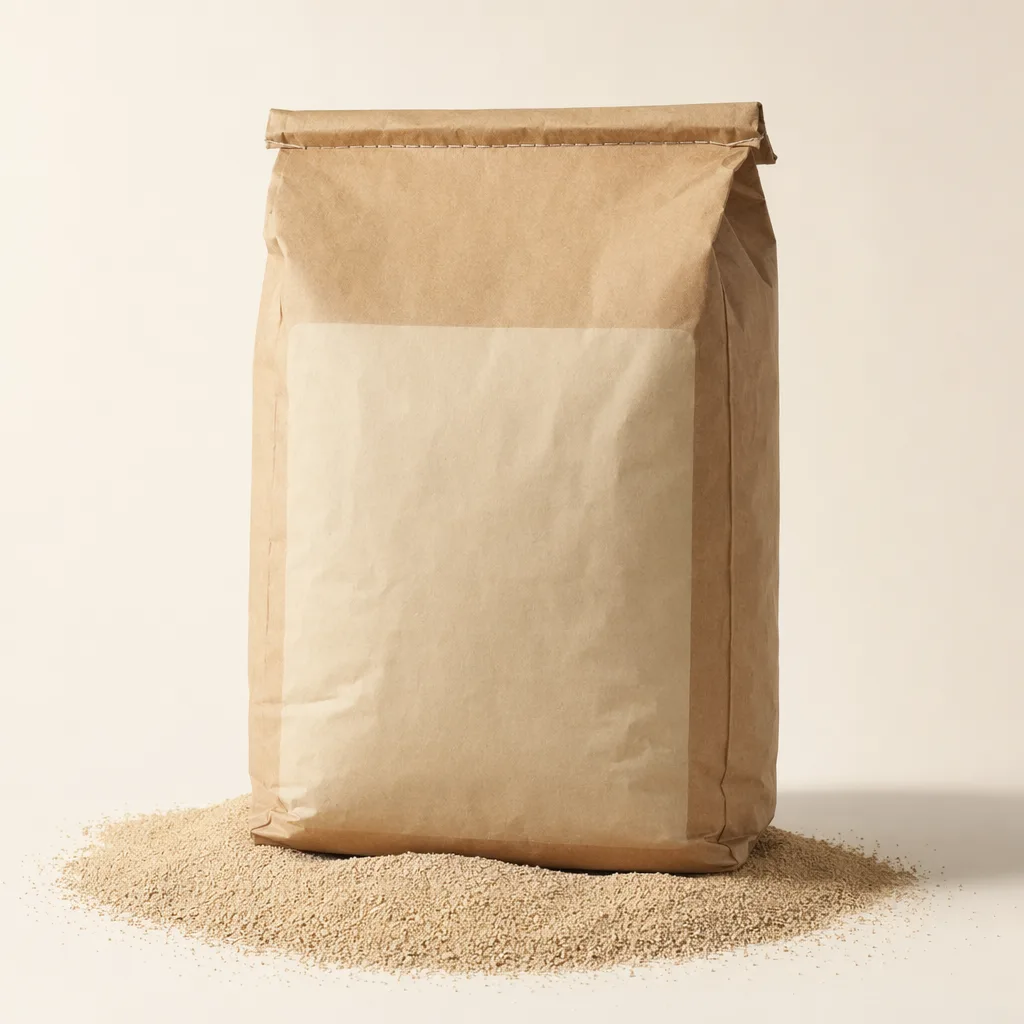
Viscosity Reducing Enzyme for Bread Baking
Viscosity reducing enzyme for bread baking is a food-grade processing aid used to modify arabinoxylans and related cereal gums so industrial doughs run with more consistent flow, machinability, and loaf structure. ART-EN-063 is supplied for commercial bakery trials and routine plant production in 25 kg multi-wall sacks. ArtemisYeast supports wholesale availability for qualified industrial buyers, with bulk quote on request, lot documentation, and export packing options for international procurement teams.
- ✓ Free worldwide shipping
- ✓ ISO-aligned manufacturing
- ✓ Certificate of Analysis on request
- ✓ Bulk & custom volumes quoted on request
Overview
ART-EN-063 is an industrial viscosity reducing enzyme preparation for bread and bakery processing, typically based on xylanase and supporting hemicellulase activities selected for wheat flour systems. In high-speed dough mixing and forming, water-soluble pentosans can increase dough viscosity, reduce gas expansion, and create variation between flour lots. This enzyme helps hydrolyze selected non-starch polysaccharides into shorter-chain fractions, supporting controlled dough extensibility, smoother sheeting, and more uniform proofing response.
The product is intended for use by plant bakeries, premix manufacturers, improver blenders, and R&D teams developing pan bread, buns, rolls, toast bread, and frozen dough systems. Typical specification targets include powder form, light tan to off-white color, moisture not more than 8%, 40-80 mesh particle profile, food-grade carrier, and lot-specific declared enzyme activity. Recommended trial dosage is commonly in the 20-100 g per metric ton flour range, with optimization based on flour ash, protein, damaged starch, water absorption, and process hold time. See related processing aids in enzymes and fermentation ingredients.
Applications
- Industrial bread lines: improves dough handling in continuous mixers, dividers, moulders, proofers, and high-speed pan bread equipment where viscosity drift can reduce line efficiency.
- Bakery improver blends: suitable for dry premixes combining oxidizing agents, emulsifiers, fungal alpha-amylase, yeast nutrients, ascorbic acid, and functional flour ingredients, subject to compatibility testing.
- Frozen and chilled dough: supports dough relaxation and processing consistency where low-temperature storage, thawing, and delayed baking create additional stress on gluten and water distribution.
- Flour correction programs: used by millers and bakery R&D teams to manage variable wheat quality, particularly differences in soluble fiber, water absorption, and dough resistance between crop origins.
- Process optimization trials: appropriate for pilot-scale bake tests measuring mix time, farinograph or extensograph response, divider pressure, loaf volume, crumb grain, and slicing performance. For sample planning or scale-up quantities, submit a request through bulk quote on request.
Storage and Handling
Store ART-EN-063 in the original sealed 25 kg multi-wall sack in a cool, dry, odor-free warehouse. Recommended storage is below 25°C with relative humidity below 65%, away from direct sunlight, steam lines, condensate, and strong oxidizing chemicals. Under recommended conditions, typical shelf life is 12 months from manufacture; confirm the assigned shelf life on the certificate of analysis for each lot.
Keep the sack closed after opening and use clean, dry utensils to limit moisture uptake. Enzyme powders should be handled with standard plant dust-control practices, including local extraction where available and appropriate personal protective equipment for weighing and dosing. Do not add directly to hot water or high-temperature process streams; blend into flour or dry premix for uniform dispersion.
Quality and Documentation
ArtemisYeast supplies ART-EN-063 for inquiry-only B2B purchasing with wholesale pricing on request. Each commercial shipment can be supported with a lot-specific CoA showing declared activity, appearance, moisture, and microbiological limits where applicable. Typical food-grade control parameters may include total plate count, yeast and mold, coliforms, Salmonella absence in the tested sample size, and heavy metal limits aligned to the destination market.
Manufacturing documentation can be provided on request, including HACCP-aligned process statements, allergen information, non-GMO statement where applicable, food-grade declaration, SDS, specification sheet, and packaging details. ISO 22000, FSSC 22000, Halal, or Kosher documentation may be available depending on production site and lot; confirm requirements before purchase. ArtemisYeast quality support is coordinated through quality and documentation review for procurement approval files.
Storage & Handling
Refer to the CoA for product-specific storage conditions. Ship cold-chain where required.
Quality & Documentation
Manufactured under ISO-aligned quality management systems. Full documentation — Certificate of Analysis (CoA), Material Safety Data Sheet (MSDS), formulation summary, and stability data — is available on request. Email info@artemisyeast.com with the SKU.
About this product
01 What is the typical shelf life?
02 Do you offer documentation (CoA, food-grade declaration)?
03 What is the minimum order quantity?
04 Is bulk pricing available?
05 How is this product shipped internationally?
More from Enzymes & Fermentation Inputs

Protein and Nucleic Acid Processing Enzyme Powder
Industrial enzyme — protein & nucleic acid processing for food, feed, brewing, and biotechnology processing.
Industrial Alpha-Amylase Enzyme for Starch Processing
Industrial enzyme — α- amylase for food, feed, brewing, and biotechnology processing.
β-Glucanase Enzyme for Brewing, Baking and Feed
Industrial enzyme — β-glucanase for food, feed, brewing, and biotechnology processing.

β-Mannanase Enzyme for Food, Feed, and Brewing
Industrial enzyme — β-mannanase for food, feed, brewing, and biotechnology processing.