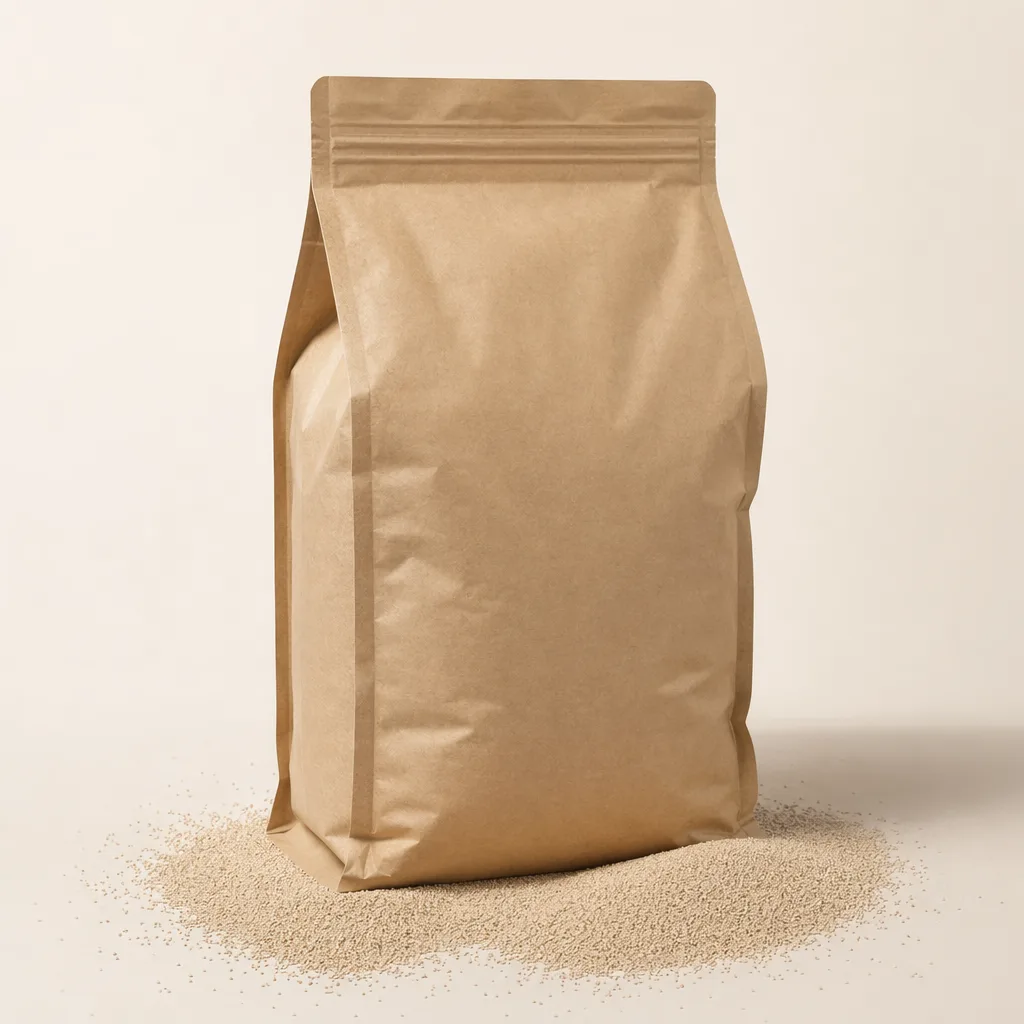
Active Dry Ale Brewing Yeast
Active dry ale brewing yeast is a dehydrated, top-fermenting Saccharomyces cerevisiae culture designed for reliable ale fermentation in commercial brewing. ART-BW-014 is supplied in 10 kg foil pouches for craft breweries, pilot plants, and beverage manufacturers producing IPA, pale ale, stout, porter, brown ale, and English-style ales. The strain profile supports high flocculation, moderate-to-high attenuation, and an ester-forward sensory contribution. Wholesale availability is inquiry-only, with bulk quote on request.
- ✓ Free worldwide shipping
- ✓ ISO-aligned manufacturing
- ✓ Certificate of Analysis on request
- ✓ Bulk & custom volumes quoted on request
Overview
ART-BW-014 is an active dry ale-strain brewing yeast developed for breweries that require consistent fermentation kinetics, practical dry-yeast logistics, and style-flexible ale performance. The product is suitable for facilities scaling from brewhouse trials to recurring production, with a 10 kg foil pouch format that supports bulk handling, batch traceability, and controlled inventory rotation. It is positioned within the brewing and winemaking yeast category for B2B sourcing teams that buy by specification rather than retail pack size.
Typical technical targets include viable yeast count of not less than 1.0×10^10 CFU/g at packing, moisture not more than 8.0%, and high flocculation after primary fermentation. Apparent attenuation is generally 72–78% depending on wort composition, pitching rate, oxygenation, and fermentation temperature. Recommended fermentation range is 16–24°C, with cleaner performance toward the lower end and more expressive esters at warmer ale temperatures. The yeast is intended for direct pitching or rehydration according to site SOP, and it is compatible with standard brewery raw materials, CIP discipline, and cone-bottom tank operations.
Applications
- Craft beer production: formulated for IPA, pale ale, amber ale, brown ale, stout, porter, bitter, and English ale profiles where moderate ester character and reliable top fermentation are required.
- Commercial brewery operations: supports predictable attenuation, fast sedimentation, and manageable yeast cropping practices in stainless steel fermenters, unitanks, and cylindroconical tanks.
- Product development and pilot brewing: suitable for R&D teams comparing yeast expression across hop-forward, roasted malt, and balanced malt styles before scale-up.
- Contract and regional brewing: dry format reduces cold-chain dependence versus liquid cultures and simplifies cross-site standardization when procurement teams need repeatable inputs.
- Specialty beverage fermentation: may be evaluated in malt-based fermented beverages where an ale yeast profile, moderate attenuation, and rapid clarification are desired.
Storage and Handling
Store unopened 10 kg foil pouches in a cool, dry, odor-free warehouse area, ideally below 10°C for maximum activity retention; short-term ambient storage may be acceptable when temperature and humidity are controlled. Protect from moisture, oxygen exposure, direct sunlight, and strong-smelling materials. Typical shelf life is up to 24 months from manufacture when unopened and stored under recommended conditions; confirm the lot-specific best-before date on the certificate or pouch label.
After opening, reseal promptly or transfer to a clean, dry, food-grade container and use as quickly as practicable. Avoid repeated warming and cooling cycles. Common pitching ranges are 50–100 g/hL for standard-strength ales, adjusted for original gravity, yeast age, wort oxygenation, and brewery performance targets.
Quality and Documentation
Each production lot is released against defined microbiological, physical, and performance parameters. Typical documentation can include certificate of analysis, product specification, allergen statement, food-grade declaration, non-GMO status statement where applicable, safety data sheet, packing list, and export documents. Food-safety system documentation such as HACCP-aligned manufacturing records, ISO 22000, FSSC 22000, Halal, or Kosher documents may be available depending on production site and order requirements; review current documentation through ArtemisYeast quality support before approval.
Procurement teams can request lot data for viable count, moisture, purity, and sensory performance. Typical microbiology may include limits for total bacteria, coliforms, Escherichia coli, Salmonella, and wild yeast, with acceptance criteria confirmed on the lot CoA. For specification review, technical comparison, and wholesale pricing on request, submit the project details through request a quote.
Storage & Handling
Refer to the CoA for product-specific storage conditions. Ship cold-chain where required.
Quality & Documentation
Manufactured under ISO-aligned quality management systems. Full documentation — Certificate of Analysis (CoA), Material Safety Data Sheet (MSDS), formulation summary, and stability data — is available on request. Email info@artemisyeast.com with the SKU.
About this product
01 What is the typical shelf life?
02 Do you offer documentation (CoA, food-grade declaration)?
03 What is the minimum order quantity?
04 Is bulk pricing available?
05 How is this product shipped internationally?
More from Brewing & Winemaking Yeast
Super Turbo Yeast for High-Gravity Fermentation
Active dry super turbo yeast for craft brewers, winemakers, distillers, and industrial fermentation.
Dry Fermentation Nutrients and Protectors for Yeast
Active dry nutrients and protectors for craft brewers, winemakers, distillers, and industrial fermentation.
Dry Winemaking Enzyme for Fermentation Processing
Active dry winemaking enzyme for craft brewers, winemakers, distillers, and industrial fermentation.
Super Turbo Yeast for Craft Brewing, 10 kg Pouch
Super Turbo Yeast for craft brewing applications. Active dry super turbo yeast for craft brewers, winemakers,…