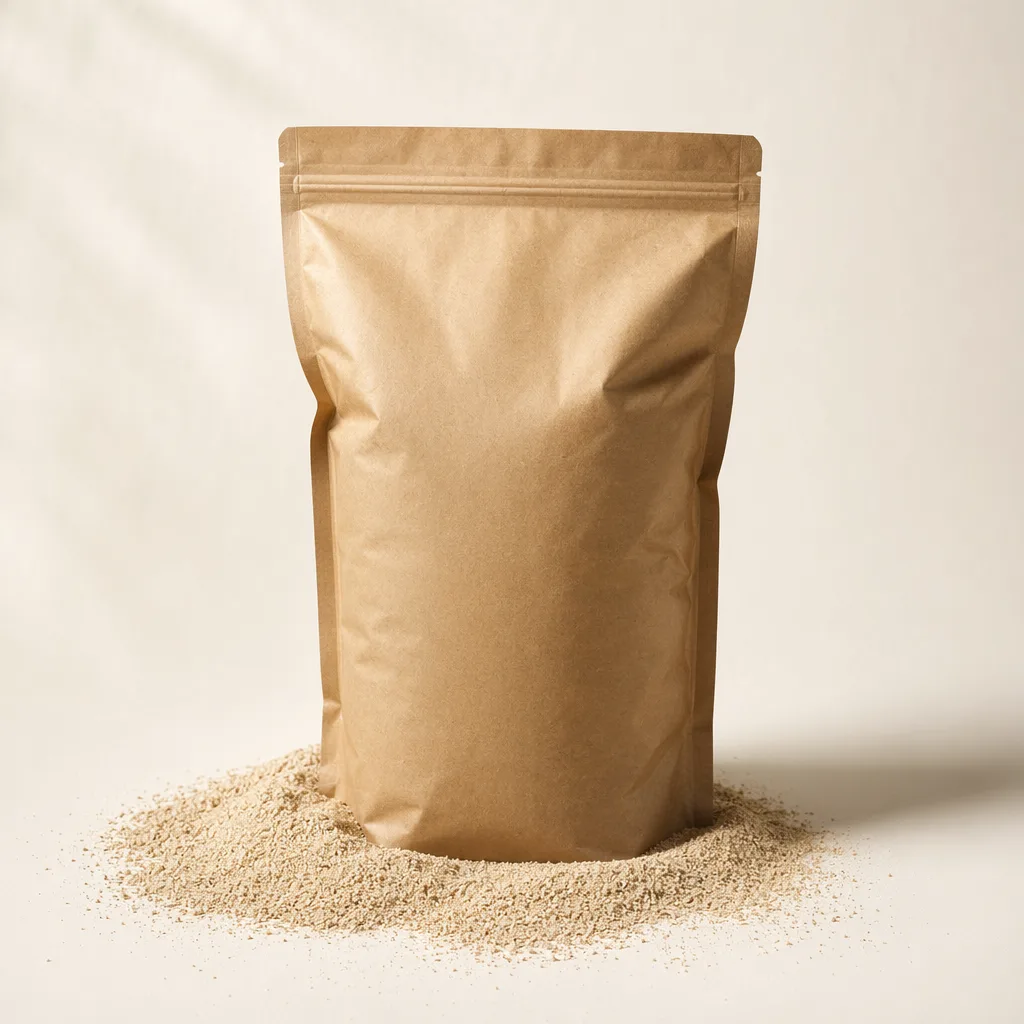
Brewing Alpha-Amylase Enzyme
Brewing alpha-amylase enzyme is a food-processing enzyme preparation used to hydrolyze gelatinized starch into shorter dextrins during mash, wort, and spirits production. ART-BW-049 is supplied for distilleries, breweries, and beverage R&D teams requiring controlled liquefaction, improved starch conversion, and more consistent downstream fermentation. Available in 10 kg foil pouches for bulk procurement, with wholesale pricing on request and technical documentation available for qualified industrial buyers.
- ✓ Free worldwide shipping
- ✓ ISO-aligned manufacturing
- ✓ Certificate of Analysis on request
- ✓ Bulk & custom volumes quoted on request
Overview
ART-BW-049 Brewing Alpha-Amylase Enzyme is formulated for distilled spirits mash processing and high-gravity brewing operations where starch conversion control affects extract yield, viscosity, filtration, and fermentation consistency. Alpha-amylase cleaves internal alpha-1,4 glycosidic bonds in gelatinized starch, reducing mash viscosity and producing soluble dextrins that can be further converted by malt enzymes or complementary saccharification systems. For procurement teams comparing products in the brewing and winemaking supply category, this item is intended for industrial beverage use rather than direct retail sale.
Typical purchasing specifications may include off-white to tan powder appearance, food-grade carrier system, moisture not more than 8%, and declared enzyme activity on the certificate of analysis for each lot. Operating conditions depend on mash composition and process design; pilot testing commonly evaluates pH 5.0-6.5 and elevated mash temperatures suitable for liquefaction. Dosage should be optimized by substrate load, grist type, gelatinization temperature, residence time, and target fermentability. ART-BW-049 is supplied as a 10 kg foil pouch for controlled plant trials, scale-up, and recurring bulk programs; submit process details through request a bulk quote for lot availability and specification matching.
Applications
- Distilled spirits mash: Supports liquefaction of corn, wheat, rice, sorghum, barley, or mixed-grain mashes by lowering viscosity after starch gelatinization, helping pumps, heat exchangers, and agitators run more predictably.
- High-gravity brewing: Helps reduce residual starch and iodine-positive material where adjunct loading, mash thickness, or temperature profile limits native malt enzyme performance. Use should be validated against the desired attenuation, flavor profile, and filtration behavior.
- Brewhouse and distillery R&D: Suitable for bench trials comparing enzyme dose, mash solids, pH, temperature hold, and residence time before committing to plant-scale addition points.
- Extract and beverage base production: Can be incorporated into controlled starch hydrolysis steps where consistent dextrin formation and reduced mash viscosity are required before clarification or further processing.
- Process optimization: Helps production teams evaluate yield, lautering or separation rate, fermenter loading, and residual gravity as part of a defined process improvement program.
Storage and Handling
Store unopened 10 kg foil pouches in a cool, dry, well-ventilated warehouse away from direct sunlight, moisture, strong odors, and incompatible chemicals. A typical storage recommendation is below 25°C with relative humidity controlled where possible. Avoid repeated freeze-thaw cycling, condensation, and open-bag exposure, as moisture uptake can reduce flowability and may affect enzyme performance. After opening, reseal promptly or transfer to a clean, dry, labeled container with lot traceability maintained.
Use standard industrial hygiene controls when handling enzyme powders. Avoid dust formation, inhalation of airborne particles, and contact with eyes or broken skin. Operators should follow the site safety data sheet, wear suitable gloves, eye protection, and respiratory protection where dust exposure is possible, and clean spills using methods that minimize aerosol generation. For dosing, pre-dispersion in water or direct addition should be validated against the plant’s mash-in sequence, agitation intensity, and temperature profile.
Quality and Documentation
ArtemisYeast supports industrial purchasing with lot-level documentation suited to beverage ingredient qualification. A certificate of analysis can state enzyme activity, appearance, moisture, microbiological indicators as applicable, lot number, manufacturing date, and retest or best-before date. Food-grade declaration, allergen statement, non-GMO statement where applicable, safety data sheet, and country-of-origin information may be supplied on request. HACCP-aligned manufacturing, ISO 22000, FSSC 22000, Halal, or Kosher documentation may be available depending on the selected production lot and should be confirmed before purchase through the quality documentation review process.
Incoming inspection is recommended for every shipment, including pouch integrity, lot code verification, document reconciliation, and small-scale activity confirmation when the enzyme is critical to yield or fermentability. For multi-site distillery groups and contract manufacturers, ArtemisYeast can support specification alignment, retained sample expectations, and repeat-order documentation so procurement, quality assurance, and production teams are working from the same approved item file.
Storage & Handling
Refer to the CoA for product-specific storage conditions. Ship cold-chain where required.
Quality & Documentation
Manufactured under ISO-aligned quality management systems. Full documentation — Certificate of Analysis (CoA), Material Safety Data Sheet (MSDS), formulation summary, and stability data — is available on request. Email info@artemisyeast.com with the SKU.
About this product
01 What is the typical shelf life?
02 Do you offer documentation (CoA, food-grade declaration)?
03 What is the minimum order quantity?
04 Is bulk pricing available?
05 How is this product shipped internationally?
More from Brewing & Winemaking Yeast
Super Turbo Yeast for High-Gravity Fermentation
Active dry super turbo yeast for craft brewers, winemakers, distillers, and industrial fermentation.
Dry Fermentation Nutrients and Protectors for Yeast
Active dry nutrients and protectors for craft brewers, winemakers, distillers, and industrial fermentation.
Dry Winemaking Enzyme for Fermentation Processing
Active dry winemaking enzyme for craft brewers, winemakers, distillers, and industrial fermentation.
Super Turbo Yeast for Craft Brewing, 10 kg Pouch
Super Turbo Yeast for craft brewing applications. Active dry super turbo yeast for craft brewers, winemakers,…