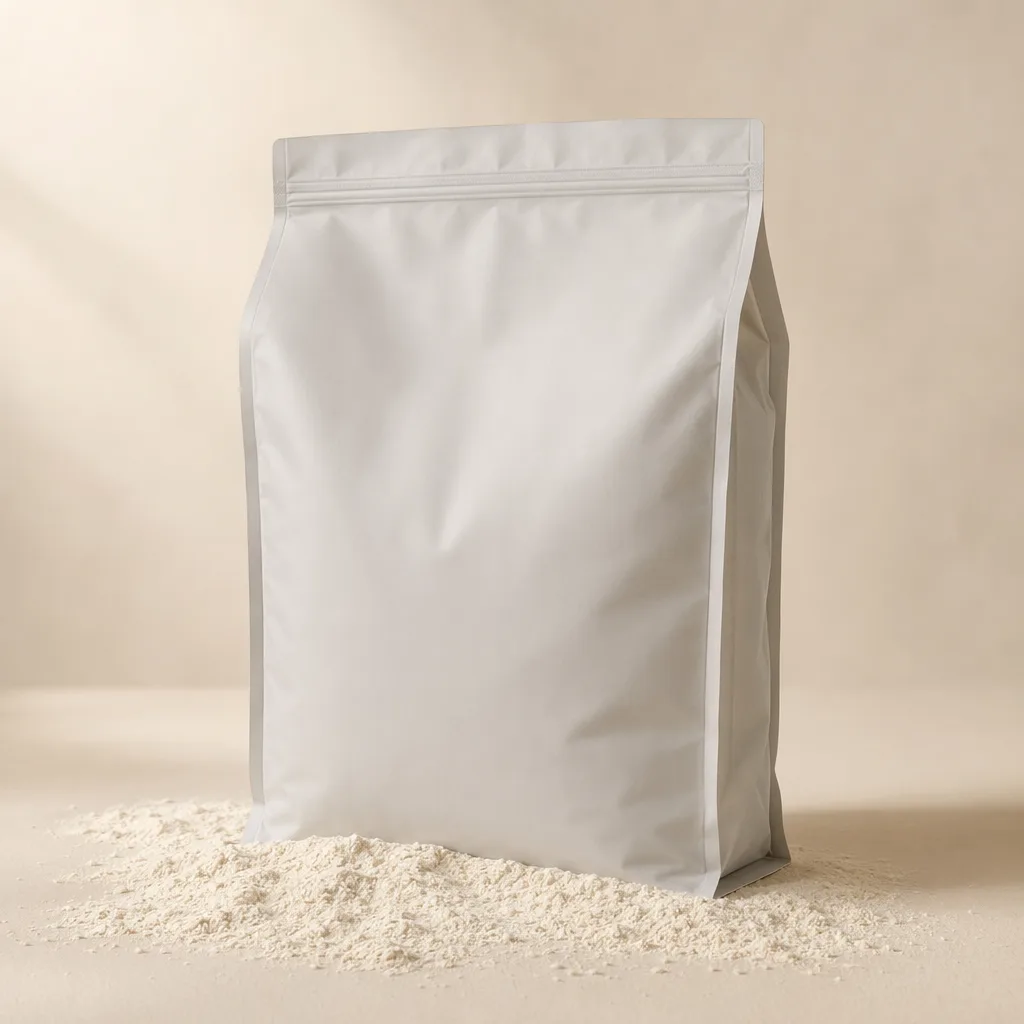
Brewing Beta-Glucanase Enzyme
Brewing beta-glucanase enzyme is a powdered microbial enzyme preparation that hydrolyzes cereal beta-glucans to lower mash and wort viscosity. ART-BW-051 is supplied in 10 kg foil pouches for craft breweries, pilot brewhouses, and regional beer plants processing barley, rye, wheat, or high-adjunct grists. Use it as a process aid in mashing and lautering trials where slow run-off, haze load, or filter pressure is linked to soluble beta-glucan. Wholesale pricing on request is available through bulk inquiry.
- ✓ Free worldwide shipping
- ✓ ISO-aligned manufacturing
- ✓ Certificate of Analysis on request
- ✓ Bulk & custom volumes quoted on request
Overview
ART-BW-051 is a brewing beta-glucanase enzyme formulated for mash-side viscosity reduction and improved wort separation. The enzyme cleaves beta-glucan polymers from barley, rye, wheat, and other cereal materials into shorter soluble fragments, helping brewers manage lautering speed, filter load, and brewhouse consistency. It is not a yeast culture, so CFU/g is not applicable; typical control parameters are enzyme activity, moisture, microbiological limits, and heavy-metal compliance as stated on the batch Certificate of Analysis.
The product is generally used in the mash or cereal-cooking stage, where pH and temperature are favorable for beta-glucan hydrolysis. Typical technical targets for evaluation include pH 4.5–6.0, mash temperatures around 45–65°C, moisture not more than 8%, and a free-flowing beige to light-brown powder format. Trial dosage is process-dependent and should be validated against malt analysis, grist ratio, lauter tun geometry, wort turbidity, and downstream filtration. For adjacent brewing inputs, see our brewing and winemaking yeast category.
Applications
- Craft breweries producing barley-based ales and lagers that require more predictable mash viscosity and lauter run-off.
- Rye beer and wheat beer programs where high soluble beta-glucan can raise wort viscosity and filtration pressure.
- High-adjunct brewing trials using unmalted cereal, flakes, or specialty grains that increase gum load in the mash.
- Pilot brewing and R&D recipe development requiring controlled enzyme comparison across grist bills and mash schedules.
- Regional beer plants seeking bulk supply continuity in 10 kg foil pouch format for controlled warehouse rotation.
- Contract brewing operations standardizing process aids across multiple recipes while maintaining batch-level traceability.
Storage and Handling
Store sealed pouches in a cool, dry, odor-free warehouse, ideally below 25°C and away from direct sunlight, steam lines, and high humidity. Keep packaging closed between uses and reseal promptly after dispensing to limit moisture uptake and activity loss. Typical shelf life is up to 12 months when stored in original unopened packaging under recommended conditions; final shelf life is confirmed on the product label and CoA.
Use clean, dry scoops and avoid generating dust during weighing. Enzyme powders should be handled with standard plant hygiene controls, local occupational safety procedures, and appropriate personal protection for powdered processing aids. Do not add directly to boiling wort unless your validation work confirms the intended process effect.
Quality and Documentation
ArtemisYeast supplies ART-BW-051 for B2B procurement with lot traceability, export documentation support, and batch-specific CoA available on request. Common documentation packages can include specification sheet, allergen statement, food-grade declaration, safety data sheet, and microbiological results. HACCP-aligned manufacturing information and certifications such as ISO 22000, FSSC 22000, Halal, or Kosher may be provided where applicable as documentation available on request.
Incoming quality checks should verify pouch integrity, lot number, expiry, appearance, activity reference, and moisture. Brewing performance should be confirmed in plant trials using your own malt, water profile, mash program, and filtration system. For supplier qualification or audit paperwork, contact our team through quality documentation support or request a bulk quote on request.
Storage & Handling
Refer to the CoA for product-specific storage conditions. Ship cold-chain where required.
Quality & Documentation
Manufactured under ISO-aligned quality management systems. Full documentation — Certificate of Analysis (CoA), Material Safety Data Sheet (MSDS), formulation summary, and stability data — is available on request. Email info@artemisyeast.com with the SKU.
About this product
01 What is the typical shelf life?
02 Do you offer documentation (CoA, food-grade declaration)?
03 What is the minimum order quantity?
04 Is bulk pricing available?
05 How is this product shipped internationally?
More from Brewing & Winemaking Yeast
Super Turbo Yeast for High-Gravity Fermentation
Active dry super turbo yeast for craft brewers, winemakers, distillers, and industrial fermentation.
Dry Fermentation Nutrients and Protectors for Yeast
Active dry nutrients and protectors for craft brewers, winemakers, distillers, and industrial fermentation.
Dry Winemaking Enzyme for Fermentation Processing
Active dry winemaking enzyme for craft brewers, winemakers, distillers, and industrial fermentation.
Super Turbo Yeast for Craft Brewing, 10 kg Pouch
Super Turbo Yeast for craft brewing applications. Active dry super turbo yeast for craft brewers, winemakers,…