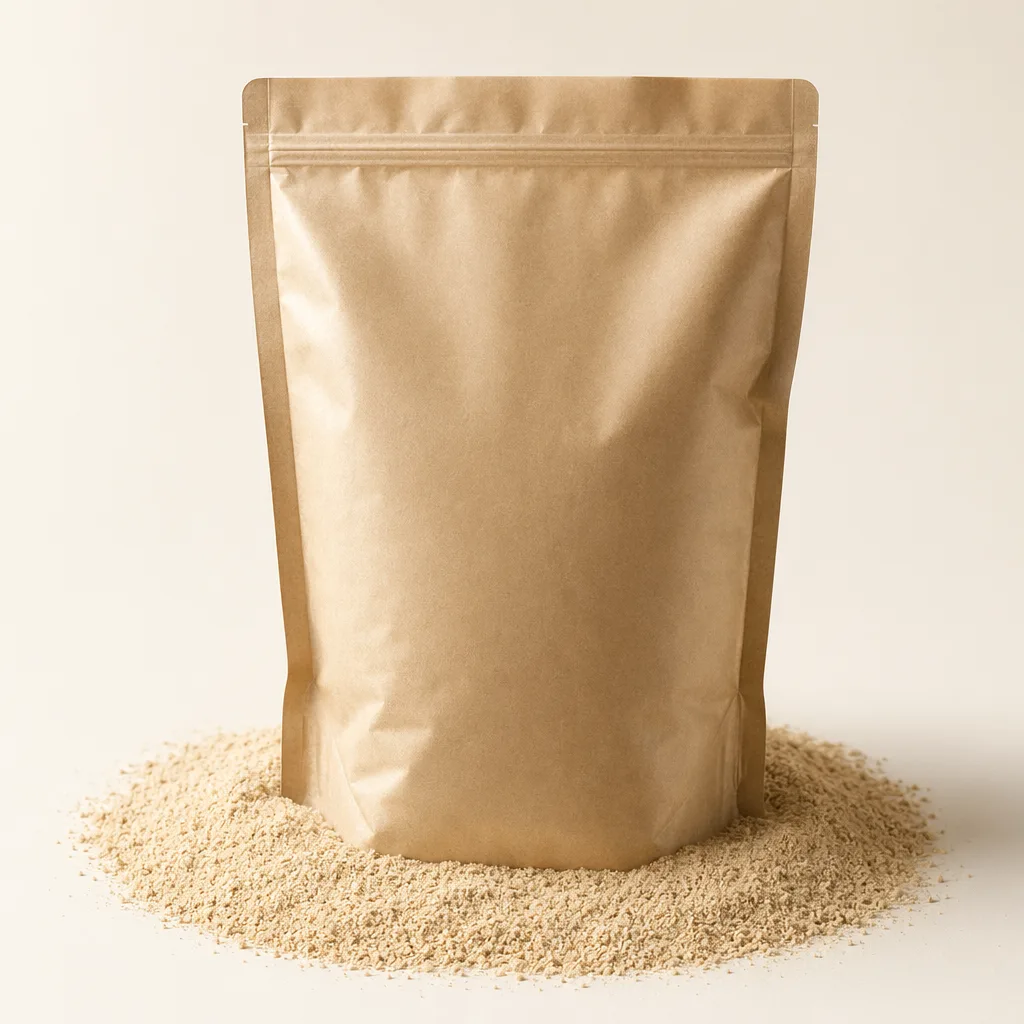
Sour Beer Brewing Yeast Blend
Sour Beer Brewing Yeast Blend is a dry mixed-culture brewing ingredient combining Saccharomyces, Brettanomyces, and lactic acid bacteria for controlled sour beer production. ART-BW-022 is supplied in 10 kg foil pouches for commercial breweries developing kettle sour, Berliner weisse, gueuze-style, farmhouse, and mixed-fermentation programs. ArtemisYeast supports inquiry-only procurement with technical documentation, batch references, and wholesale pricing on request.
- ✓ Free worldwide shipping
- ✓ ISO-aligned manufacturing
- ✓ Certificate of Analysis on request
- ✓ Bulk & custom volumes quoted on request
Overview
ART-BW-022 is formulated for breweries that require a practical, scalable souring culture rather than maintaining multiple in-house propagations. The blend contains a selected Saccharomyces fraction for primary attenuation, Brettanomyces for slow secondary character development, and Lactobacillus culture for lactic acid generation under suitable wort conditions. It is intended for professional brewing trials, pilot brewhouses, and production-scale sour programs where flavor consistency, dry-format logistics, and documented lots are required.
Typical specification targets include moisture not more than 8.0%, total viable yeast count not less than 1.0×10^10 CFU/g at packing, lactic culture count not less than 1.0×10^9 CFU/g at packing, and fine granule distribution suitable for direct pitching or pre-hydration. Expected performance depends on wort gravity, hopping rate, oxygen exposure, temperature, pitching rate, and residence time. For sour beer strains, low-hop wort is generally preferred for lactic activity; Brettanomyces character develops more slowly during maturation. Related brewing ingredients are listed under brewing and winemaking yeast.
Applications
- Kettle sour production: Suitable for brewers producing tart wheat beers, fruited sours, and quick-turn sour bases. Use in pre-boil souring programs where the brewer controls wort sanitation, oxygen pickup, temperature, and pH endpoint before boiling or downstream fermentation.
- Berliner weisse and gose-style beers: Supports bright acidity and clean attenuation in low to moderate gravity wort. Salt, coriander, fruit, and dry-hop additions should be evaluated in pilot trials because hop compounds and mineral balance can affect lactic culture expression.
- Mixed-fermentation ales: Provides a combined culture platform for farmhouse, wild-style, and barrel-aged beers where primary fermentation and extended maturation are part of the sensory target. Brettanomyces-derived complexity is time-dependent and should be validated against the brewery’s packaging timeline.
- Gueuze-style and blending programs: Useful for brewers building sour stock for blending, oak aging, or refermentation. Attenuation, acidity, and volatile character should be tracked by gravity, pH, total acidity, and sensory panel review.
- R&D and scale-up: ART-BW-022 enables R&D teams to compare inoculation rates, temperature profiles, and maturation regimes using a consistent dry blend. For commercial supply planning, submit annual volume, destination, and pack requirements through request a bulk quote.
Storage and Handling
Store unopened 10 kg foil pouches in a cool, dry area away from direct sunlight, steam lines, and strong odors. Recommended storage is 4-10 °C for maximum culture stability; short ambient transit is acceptable when controlled and documented. Typical shelf life is 18-24 months from production when stored under recommended conditions, subject to lot-specific confirmation. After opening, purge or reseal where possible, keep dry, and use promptly to limit moisture uptake and loss of viability. Breweries should avoid exposing the dry culture to chlorinated water, high dissolved oxygen during souring stages, or excessive wort bitterness when lactic acid activity is desired. Pre-hydration, if used, should follow the technical sheet supplied with the lot.
Quality and Documentation
ART-BW-022 is supplied for industrial brewing use with lot traceability and specification review before shipment. Available documentation may include certificate of analysis, technical data sheet, safety data sheet where applicable, allergen statement, non-GMO statement where applicable, and food-grade declaration. Microbiological and physicochemical results are lot-dependent and should be confirmed at order placement. Manufacturing and packing controls are HACCP-aligned, and documentation for ISO 22000, FSSC 22000, Halal, or Kosher status can be reviewed when available for the requested origin and batch. ArtemisYeast encourages breweries to qualify the blend in pilot wort before production release. Review our quality and documentation process for procurement onboarding, audit files, and export paperwork support.
Storage & Handling
Refer to the CoA for product-specific storage conditions. Ship cold-chain where required.
Quality & Documentation
Manufactured under ISO-aligned quality management systems. Full documentation — Certificate of Analysis (CoA), Material Safety Data Sheet (MSDS), formulation summary, and stability data — is available on request. Email info@artemisyeast.com with the SKU.
About this product
01 What is the typical shelf life?
02 Do you offer documentation (CoA, food-grade declaration)?
03 What is the minimum order quantity?
04 Is bulk pricing available?
05 How is this product shipped internationally?
More from Brewing & Winemaking Yeast
Super Turbo Yeast for High-Gravity Fermentation
Active dry super turbo yeast for craft brewers, winemakers, distillers, and industrial fermentation.
Dry Fermentation Nutrients and Protectors for Yeast
Active dry nutrients and protectors for craft brewers, winemakers, distillers, and industrial fermentation.
Dry Winemaking Enzyme for Fermentation Processing
Active dry winemaking enzyme for craft brewers, winemakers, distillers, and industrial fermentation.
Super Turbo Yeast for Craft Brewing, 10 kg Pouch
Super Turbo Yeast for craft brewing applications. Active dry super turbo yeast for craft brewers, winemakers,…