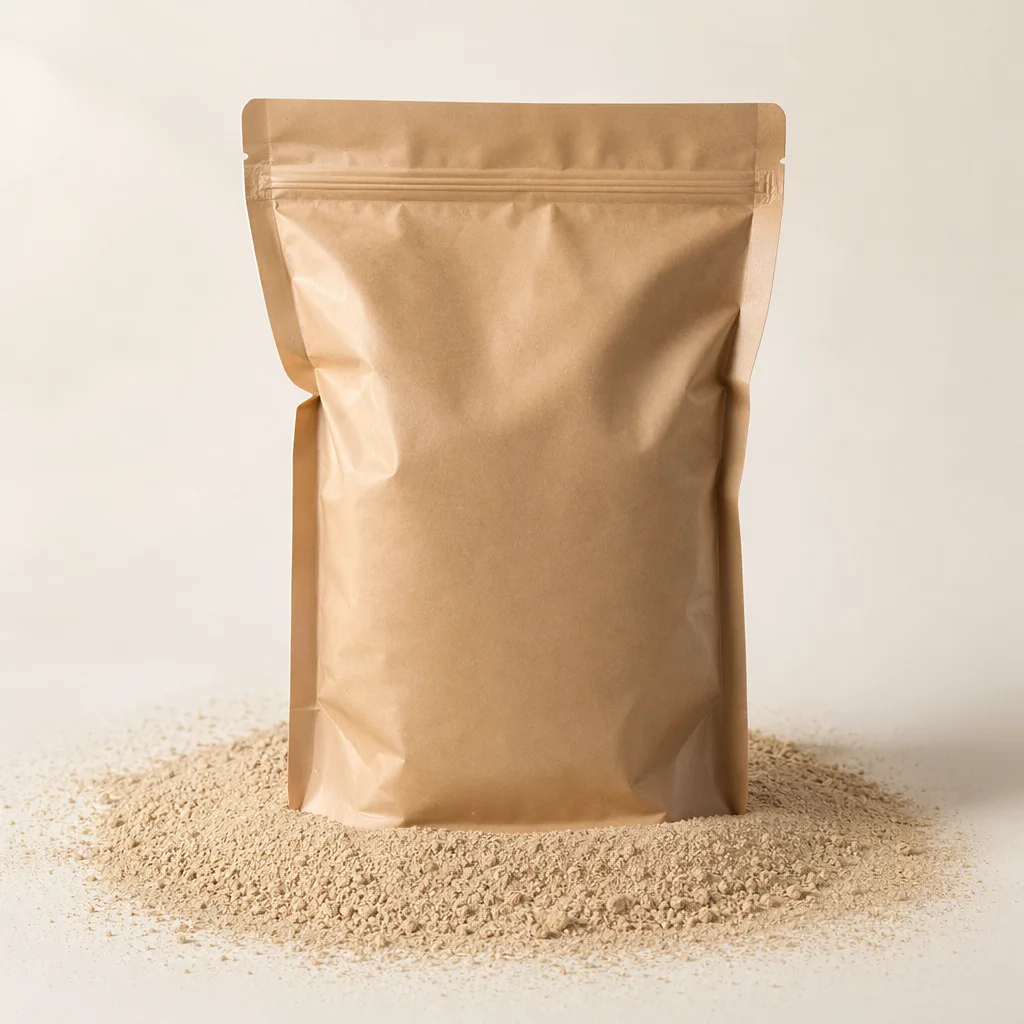
Winemaking Pectinase Enzyme
Winemaking pectinase enzyme is a food-grade processing aid used to break down grape pectin during crushing, maceration, pressing, and clarification. ART-BW-045 is supplied by ArtemisYeast for wineries, beverage ingredient distributors, and cellar supply programs requiring consistent enzyme functionality in a 10 kg foil pouch format. It supports improved must flow, faster solids separation, and more predictable extraction in red, white, and rosé wine processes. Wholesale pricing on request is available through bulk inquiry.
- ✓ Free worldwide shipping
- ✓ ISO-aligned manufacturing
- ✓ Certificate of Analysis on request
- ✓ Bulk & custom volumes quoted on request
Overview
ART-BW-045 is a winemaking pectinase enzyme preparation designed for pectin degradation in grape must and juice. Pectin naturally increases viscosity, slows settling, and can restrict juice release during pressing. This product targets the pectic polysaccharide network through polygalacturonase and related pectinolytic activities, helping wineries improve juice extraction, clarification kinetics, filterability, and color release during controlled maceration.
The product is supplied as a dry enzyme preparation in a 10 kg foil pouch for professional winery and beverage ingredient operations. Typical procurement specifications may include declared enzyme activity on the certificate of analysis, moisture not more than 8%, low insoluble matter, and food-grade carrier compliance. Final dosage depends on grape variety, pectin load, temperature, contact time, SO2 level, and desired extraction profile. Buyers sourcing within the brewing and winemaking ingredient category can request lot-specific data before shipment.
Applications
- Red wine maceration: Supports pectin breakdown during skin contact, assisting juice release, cap management, color extraction, and downstream clarification without changing the winery’s selected yeast program.
- White and rosé juice processing: Used after crushing or pressing to reduce viscosity, accelerate settling, and improve racking efficiency prior to fermentation.
- Press yield optimization: Helps open the grape cell-wall matrix, allowing more efficient free-run and press fractions when applied at validated cellar dosage rates.
- Clarification and filtration support: Reduces pectin-related haze risk and can improve pre-filtration flow when used with normal settling, flotation, centrifugation, or fining procedures.
- Cellar supply and contract production: Suitable for wineries, custom crush operators, beverage ingredient distributors, and private-label cellar aid programs requiring bulk quote on request supply.
Storage and Handling
Store unopened pouches in a cool, dry, odor-free area, ideally 5–25 °C, away from direct sunlight and condensation. Keep the pouch sealed after opening and minimize repeated exposure to humid cellar air, because moisture can reduce free-flowing performance and long-term activity. Under recommended storage conditions, typical shelf life is 18–24 months from manufacture, subject to the activity retention statement shown on the lot certificate.
For use, disperse the enzyme in clean water or must according to the cellar’s standard operating procedure, then mix uniformly into crushed grapes, must, or juice. Avoid direct contact with high-strength sanitizers, excessive heat, or highly alkaline cleaning residues. As with all dry enzyme preparations, operators should avoid dust generation and use suitable plant hygiene and personal protection procedures for weighing and dosing.
Quality and Documentation
ArtemisYeast supplies ART-BW-045 for inquiry-only commercial procurement, with documentation matched to importer, distributor, and production-site requirements. A certificate of analysis can confirm lot number, appearance, declared enzyme activity method, moisture, microbiological limits, and applicable food-grade statements. Specification sheets, allergen statements, non-GMO status where applicable, and safety data sheets can be provided during qualification.
Manufacturing and supply documentation may include HACCP-aligned controls and food-safety certification documentation available on request, such as ISO 22000, FSSC 22000, Halal, or Kosher where supported by the producing site and product lot. ArtemisYeast can also assist with export documents, label review, and consolidated shipment planning. Visit quality and documentation for the type of records commonly requested by beverage plants and international buyers.
Storage & Handling
Refer to the CoA for product-specific storage conditions. Ship cold-chain where required.
Quality & Documentation
Manufactured under ISO-aligned quality management systems. Full documentation — Certificate of Analysis (CoA), Material Safety Data Sheet (MSDS), formulation summary, and stability data — is available on request. Email info@artemisyeast.com with the SKU.
About this product
01 What is the typical shelf life?
02 Do you offer documentation (CoA, food-grade declaration)?
03 What is the minimum order quantity?
04 Is bulk pricing available?
05 How is this product shipped internationally?
More from Brewing & Winemaking Yeast
Super Turbo Yeast for High-Gravity Fermentation
Active dry super turbo yeast for craft brewers, winemakers, distillers, and industrial fermentation.
Dry Fermentation Nutrients and Protectors for Yeast
Active dry nutrients and protectors for craft brewers, winemakers, distillers, and industrial fermentation.
Dry Winemaking Enzyme for Fermentation Processing
Active dry winemaking enzyme for craft brewers, winemakers, distillers, and industrial fermentation.
Super Turbo Yeast for Craft Brewing, 10 kg Pouch
Super Turbo Yeast for craft brewing applications. Active dry super turbo yeast for craft brewers, winemakers,…